




Field Devotional
Why Doesn't God Always Heal? A Chaplain's Field Devotion
A U.S. Army chaplain asks the question every hospital room asks: why doesn't God always heal? Scripture gives four honest answers — instant healing, gradual healing, sustaining grace, and eternity.

Quick answer God is a healer - that is part of who He is. But Biblical healing isn’t a vending machine. Sometimes God heals instantly. Sometimes He heals over time. Sometimes He sustains you through what He never removes. And one day He will undo every sickness for those who belong to Him. The Bible never promises you’ll never suffer. It promises that the God who walks with you through suffering is the same God who will finally heal it all - and that the deepest healing He’s already done.
In this article
- Why People Ask “Why Doesn’t God Heal Me?”
- Is God Still a Healer Today? (Exodus 15:26)
- Did Jesus Actually Heal People?
- Why Doesn’t God Always Heal? (Paul’s Thorn)
- [Does Prayer for Healing Still Work? (James 5)](#does-prayer-heal)
- [What Is the Greatest Healing? (Isaiah 53:5)](#greatest-healing)
- Will There Ever Be a Day With No More Pain?
- How to Pray for Healing When God Hasn’t Healed You (5 Steps)
- Where This Leaves You
- Frequently Asked Questions About Biblical Healing
- About the Author
The first time I prayed over a wounded soldier, I was a young chaplain who hadn’t yet learned how to take my hands off the outcome.
He was breathing. He had a name. He had a mother whose phone was about to ring on the other side of the world. And I stood at the foot of his stretcher and prayed, over and over, the only prayer I knew to pray - Lord, heal him. Heal him. Heal him.
He did not make it home.
I’ve been a U.S. Army chaplain for a long time now. I’ve prayed over men in field hospitals, in evac tents, in chapels with the lights still on at 2 a.m. I’ve prayed over a child fighting cancer in a Miami hospital bed. I’ve prayed over an elder of our church who knew he wasn’t coming back from this one. And somewhere along the way I had to make peace with a sentence that took me years to be able to say out loud:
Sometimes God heals. Sometimes God sustains. He never abandons.
That sentence isn’t a slogan. It’s the only honest summary of what Scripture actually teaches about healing, and the only one that holds up when you’re the person on the floor and the prayer hasn’t worked yet.
I’m writing this from a deployment overseas, in a tent that smells like dust and instant coffee. A soldier asked me last week, half-joking but mostly serious, “Pastor, if God’s so good at healing, why doesn’t He just heal everybody?”
It was the most honest version of the question I’ve heard all year. Let me answer it the way I answered him.
“I am the Lord, your healer.”
Exodus 15:26 (ESV)
That’s God in His own words, near the beginning of the story. Not “I am a Lord who occasionally heals.” Not “I am the Lord who heals if you believe hard enough.” Just - I am the Lord, your healer. It’s part of His name.
Here’s how that name plays out in real life.
Why People Ask “Why Doesn’t God Heal Me?”
People ask this question because the gap between the God they were taught to believe in and the body they’re living in keeps getting wider. That isn’t a faith failure. It’s an honest reckoning with what the Bible actually says about suffering, and what we sometimes tell people the Bible says.
Most of us were handed two versions of God somewhere along the way.
The first version is the one on the bumper sticker. God is good. God answers prayer. God wants you healthy and happy. That version is comforting until the diagnosis comes back, or the marriage falls apart, or the child stops breathing. Then the bumper sticker turns into a question mark, and the question mark turns into anger.
The second version is the one some of us were taught in a more cautious tradition. God is sovereign. God has a plan. Don’t expect miracles - that was a different era. That version is safer, but it leaves you with a God so distant He may as well have signed off when Acts ended.
Neither one of those is the God of the Bible.
The God of the Bible heals. He also weeps. He also says no. And if your theology of healing doesn’t make room for all three of those, your theology will break the first time real suffering finds you.
So if you’re reading this with a body that won’t cooperate - or a family member’s name on a hospital wristband, or a depression that hasn’t lifted in years, or grief that won’t stop showing up at your kitchen table - you’re not in the wrong place. You’re not asking the wrong question. You’re asking the question, and the Bible has more to say about it than you’ve probably been told.
Let me walk you through six things Scripture actually teaches about healing - the same six things I taught these soldiers last week.
Is God Still a Healer Today? (Exodus 15:26)
Yes. Healing is part of who God is, not just something He occasionally does. The God of the Bible introduces Himself as a healer, and that name has never been retired.
Look again at where Exodus 15:26 sits in the story. Israel has just walked out of slavery. They’ve crossed a sea on dry ground. They’re three days into the wilderness, they’re thirsty, and they’re scared. God leads them to bitter water, makes it sweet, and then says this:
“If you will diligently listen to the voice of the Lord your God, and do that which is right in his eyes, and give ear to his commandments and keep all his statutes, I will put none of the diseases on you that I put on the Egyptians, for I am the Lord, your healer.”
Exodus 15:26 (ESV)
The Hebrew there is Yahweh Rapha - “The Lord who heals.” It’s one of the oldest names God uses for Himself in the whole Bible. It comes before Yahweh Shalom (the Lord is peace). It comes before Yahweh Yireh (the Lord will provide). Healing isn’t an emergency feature God added later. It’s part of the introduction.
What this means, practically, is that God is not distant from your pain. He’s not embarrassed by your body. He’s not annoyed that you keep asking. The pain you’re carrying right now - the back that won’t stop hurting, the anxiety that won’t stop spinning, the addiction that won’t stop pulling, the marriage that keeps cracking - is not beneath the God who made you.
He sees it. He cares about it. He’s not asking you to stop bringing it to Him.
Healing is part of God’s character. And His care is not just spiritual - it covers the whole person. Your body matters to Him. Your mind matters to Him. Your heart matters to Him. He made all three, and He has not forgotten any of them.
Did Jesus Actually Heal People?
Yes - and not as a sideshow. The Gospels show Jesus healing as one of the central ways He announced who He was. If you took every healing story out of the Gospels, you wouldn’t have much Gospel left.
“And he went throughout all Galilee, teaching in their synagogues and proclaiming the gospel of the kingdom and healing every disease and every affliction among the people.”
Matthew 4:23 (ESV)
Read that sentence slowly. Teaching. Proclaiming. And healing. Three verbs, one ministry. Matthew puts them in the same breath because that’s how Jesus operated. He didn’t preach or heal. He preached and healed, and the two reinforced each other.
What did His healing look like?
- Blind men saw again (Mark 10:46-52).
- The lame walked (John 5:1-9).
- Lepers were cleansed and restored to their families (Luke 17:11-19).
- A bleeding woman who’d suffered twelve years was healed by touching the edge of His robe (Mark 5:25-34).
- The dead came back - Jairus’s daughter, the widow’s son at Nain, His friend Lazarus.
These weren’t tricks. They weren’t metaphors. They were Jesus saying, out loud and with His hands, the Kingdom of God is breaking into the world He made, and what’s broken is going to be put back.
And here’s the part most people miss: every one of those healings is a preview, not the main event. Jairus’s daughter was raised - and later died of old age. Lazarus walked out of his tomb - and later walked back into one. Every miracle in the Gospels was a sign pointing at the bigger miracle Jesus came to do. We’ll get there.
But the short answer is: Jesus has authority over sickness. The Gospel writers want you to walk away from their books absolutely sure of that.
Why Doesn’t God Always Heal? (Paul’s Thorn)
Sometimes God says no to a healing prayer for the same reason a wise father sometimes says no to a child’s request - because what He’s doing in you matters more than what He’s taking away. The clearest example in the New Testament is the apostle Paul.
Paul wasn’t a halfway disciple. He’d seen Jesus on a road. He’d planted churches across the Roman world. He’d raised the dead in Jesus’ name (Acts 20:9-12). If anyone had the faith and the credentials to get a healing, it was Paul.
And Paul prayed for healing - three different times - and the answer was no.
“So to keep me from becoming conceited because of the surpassing greatness of the revelations, a thorn was given me in the flesh, a messenger of Satan to harass me, to keep me from becoming conceited. Three times I pleaded with the Lord about this, that it should leave me. But he said to me, ‘My grace is sufficient for you, for my power is made perfect in weakness.’ Therefore I will boast all the more gladly of my weaknesses, so that the power of Christ may rest upon me.”
2 Corinthians 12:7-9 (ESV)
Three times Paul prayed. Three times God said no - and then explained why. Not because Paul didn’t have enough faith. Not because God didn’t love him enough. Because God was doing something in Paul that the thorn was doing and the healing wouldn’t have done.
That isn’t the answer we want. We want the healing. We want the verse that says pray harder and the cancer goes away. But the Bible refuses to lie to you. The Bible looks the soldier on the stretcher in the eye and says -
Sometimes God heals you. Sometimes God carries you through what He doesn’t take away. And both of those are answers.
Here is the field-tested distinction I’ve come to teach soldiers over the years. There are at least four ways God answers a healing prayer:
| How God answers | What it looks like | Where Scripture shows it |
|---|---|---|
| Immediate healing | The sickness is gone the moment God is asked. | Mark 5:25-34; Mark 10:46-52 |
| Gradual healing | Healing comes over time - through prayer, doctors, recovery, repentance. | 2 Kings 5:10-14; James 5:14-15 |
| Sustained through | The condition stays. God carries you, His grace becomes sufficient. | 2 Corinthians 12:7-9 |
| Healed in eternity | The healing is real, but it comes on the other side of death. | Revelation 21:4; 1 Corinthians 15:42-57 |
All four of those are healings the Bible promises. The trouble starts when we only count the first one.
If you only believe in immediate healing, every cancer is a failure. Every funeral is a defeat. Every chronic illness is evidence that someone didn’t have enough faith. That’s not a Christian theology. That’s a prosperity theology, and it has broken more believers than I can count.
The God of the Bible is bigger than the first row of that table. He heals immediately, He heals over time, He sustains through what He won’t remove, and He will heal everything in the end. Hold all four.
Does Prayer for Healing Still Work? (James 5)
Yes - and the Bible tells the church to do it on purpose, out loud, with each other. Healing prayer isn’t a private hobby. It’s a community practice.
“Is anyone among you sick? Let him call for the elders of the church, and let them pray over him, anointing him with oil in the name of the Lord. And the prayer of faith will save the one who is sick, and the Lord will raise him up. And if he has committed sins, he will be forgiven. Therefore, confess your sins to one another and pray for one another, that you may be healed.”
James 5:14-16 (ESV)
James writes that in the same letter where he tells us our life is a vapor, where he warns us about hoarding wealth, where he says faith without works is dead. James is not the apostle of vague spirituality. James is intensely practical. And James tells the church to pray for the sick - not as a last resort after the doctors give up, but as the church’s first response when one of its own is suffering.
Notice a few things in those verses.
First, the sick person initiates. “Is anyone among you sick? Let him call for the elders.” You don’t have to wait until your pastor notices. If you’re suffering, you ask. The elders - or in our church, your Community Group leaders, our prayer team, your pastors - come to you, not the other way around.
Second, prayer is connected to community. James says “confess your sins to one another and pray for one another.” The American church has a private-prayer problem. We’ve made the most powerful thing the church does into a thing we mostly do alone, in the car, with no witnesses. James knows better. Healing flows through community.
Third, the prayer is bold - but the outcome is God’s. James says the prayer of faith “will save” the sick. He doesn’t say it will always result in the specific outcome we asked for. The word he uses (sozo) means save - full restoration - and God reserves the right to decide whether that comes today, tomorrow, or in the resurrection.
That’s why we pray boldly without bargaining. Pray for the healing. Ask for the miracle. Anoint with oil. Lay on hands. And trust the One you’re praying to. Both of those are faith.
If you’re at Christchurch and you’re sick - physically, emotionally, spiritually - please don’t wait. Call our elders. Tell your Community Group. Reach out to me or any pastor on the staff. We’ll come pray with you. That’s the church’s job.
What Is the Greatest Healing? (Isaiah 53:5)
The greatest healing God has done isn’t physical. It’s the healing of your relationship with Him - and that healing is already finished for everyone who trusts Jesus.
Seven hundred years before Jesus was born, Isaiah looked down through the corridor of history and saw the Servant who was coming. Here’s what he wrote:
“But he was pierced for our transgressions; he was crushed for our iniquities; upon him was the chastisement that brought us peace, and with his wounds we are healed.”
Isaiah 53:5 (ESV)
“By his wounds we are healed.” Read that sentence the way a soldier reads an after-action report. There’s a wounded man in that sentence, and the wounded man is doing the healing.
Jesus didn’t just heal the sick. Jesus stepped into the role of the sick. He stood in the place of the broken one. He absorbed in His body what was supposed to fall on yours - the consequence of every sin you’ve committed, every prayer you’ve prayed in anger, every place you’ve failed. And the cross is the field hospital where that exchange happened.
Why does that matter for a sick person reading this article right now?
Because it means the worst thing about you has already been healed. The thing your body is doing - the cancer, the depression, the chronic pain, the addiction - is not the worst thing about you. The worst thing about you is the gap between you and God. And Jesus closed that gap on a Roman cross two thousand years ago. Spiritual healing is greater than physical healing because spiritual healing is the only one that lasts forever.
That doesn’t mean physical healing doesn’t matter. God still cares about your body. But it does mean that if you’ve trusted Jesus, the foundational healing of your life is already done. Everything else is fruit on that tree.
If you’ve never put your weight down on the Jesus Isaiah is describing - the one whose wounds heal your wounds - come to Christchurch this Sunday, or message any pastor on our team. The deepest healing you’re hungry for is closer than you think.
Will There Ever Be a Day With No More Pain?
Yes. The Bible promises a future for those who trust Jesus where every sickness, every funeral, every chronic condition, and every sorrow is fully and finally undone. That promise isn’t a coping mechanism. It’s the destination.
“He will wipe away every tear from their eyes, and death shall be no more, neither shall there be mourning, nor crying, nor pain anymore, for the former things have passed away.”
Revelation 21:4 (ESV)
Read what’s in that verse, and read what isn’t.
What’s in it: Every tear. Death, gone. Mourning, gone. Crying, gone. Pain, gone. Not muted. Not coped with. Gone.
What isn’t in it: any caveat. Any asterisk. Any “except for the people whose faith wasn’t strong enough.” This is the room the Bible has been pointing at the whole time - the room where God Himself, with His own hand, walks down each row of the redeemed and personally wipes away the tears we shed in this life.
That is the healing the gospel ultimately points at. Not just a cancer-free body in the year 2026, but a glorified body in the resurrection. Not just one more good year with your spouse, but a new heaven and a new earth where you’ll never lose anyone you love again.
Christianity is the only religion in the world that promises every wound will be undone - and grounds that promise in a man who actually walked out of His own tomb. If Jesus didn’t rise, nothing in Revelation 21 is true. If Jesus did rise, all of it is.
I’ve stood at funerals as a pastor and a chaplain. I’ve buried friends. I’ve watched widows weep and held their hands while their children stood beside the casket with no idea what to do. And in every one of those moments, the only sentence that holds is the one Revelation gives you: this is not the last chapter.
For the Christian, the funeral is not the end. The funeral is a comma.
How to Pray for Healing When God Hasn’t Healed You (5 Steps)
Pray boldly, pray honestly, pray in community, pray with submission, and pray with eternity in view. Here are five practical habits I’ve coached soldiers, congregants, and grieving families through - the same habits Scripture itself models.
1. Bring your real need to God - honestly
Don’t dress it up. Don’t spiritualize it. God doesn’t grade your prayers. The Psalms are the prayer book of the Bible, and they include lines like “How long, O Lord? Will you forget me forever?” (Psalm 13:1). If David can talk like that to God, you can too. Tell Him what hurts. Tell Him you’re scared. Tell Him you’re angry. God can take it. Polite prayers are the only ones the Bible never asks you to pray.
2. Pray with the church, not just on your own
Don’t carry this alone. James 5 is not optional. If you’re at Christchurch, tell your Community Group, ask the elders to pray over you, get on our prayer team’s list. If you’re somewhere else, find a faithful church and ask. Healing is something the Bible expects the church to do with you, not for you. Most of the people God uses to heal you are sitting in chairs near you on Sunday morning - if you’ll let them in.
3. Pray boldly, but pray in submission
Jesus prayed in Gethsemane: “Father, if you are willing, remove this cup from me. Nevertheless, not my will, but yours, be done” (Luke 22:42). That sentence is the master class on healing prayer. Two clauses. If you’re willing, take it away. But if not - Your will, not mine. Boldness and submission live in the same prayer. The first without the second is presumption. The second without the first is fatalism. Christians pray both.
4. Pray for others while you wait on your own answer
One of the loneliest things about prolonged suffering is that it can collapse your whole prayer life into one request. Don’t let it. Keep praying for the friend in the cancer ward. Keep praying for the missionary in danger. Keep praying for the new believer wrestling with doubt. Prayer was never meant to be a vending machine for self. The wider your prayer life, the smaller your own suffering will start to feel - not because it stops mattering, but because you’ll see God moving in places your pain wasn’t blocking the view of.
5. Pray with eternity in view
Read Revelation 21 once a week. Memorize it. Whisper it when you can’t sleep. “He will wipe away every tear from their eyes, and death shall be no more.” That verse is not denial. That verse is reality. The world you’re suffering in is not the world God leaves you in. Pray like that’s true. Because it is.
Where This Leaves You
If God is the healer the Bible says He is, the question isn’t whether you can trust Him with your pain. It’s whether you’ll bring your pain to Him in the first place.
Here’s how I closed the Bible study in that tent, and here’s how I’ll close this article.
You can read every healing verse in the Bible and still stay at arm’s length. You can memorize Exodus 15:26 and Matthew 4:23 and James 5 and Isaiah 53 and Revelation 21 and still keep your hand on the door, ready to leave the moment something hurts. That’s not faith. That’s research.
At some point you have to put your weight down. You have to take the very real, very tender thing you’re carrying right now - the body, the diagnosis, the depression, the grief, the marriage, the prodigal, the failure - and lay it in the hands of the God who introduces Himself as your healer.
You don’t get to choose how He answers. None of us do.
But here is what you get. You get the One who promises to be with you while you find out.
And here’s the other thing that matters. Your story is not over. Not even close. The page you’re on right now is not the last page. The hospital room is not the last room. The chronic condition is not the final word. Revelation 21 is the final word.
If you’ve never come to faith in Jesus - come this Sunday. We meet at 11 AM at 8485 SW 112th St in Miami. Plan your visit at christchurchmiami.org, or watch a recent message on our YouTube channel. We don’t have all the answers. But we know the Healer, and He knows your name.
If you’re already in our family at Christchurch - and you’re carrying something heavy this week - please don’t carry it alone. Call your elders. Tell your Community Group. Reach out to a pastor. The body of Christ exists for moments exactly like this one. Let us pray with you.
And for the soldier who asked the question in the tent - and for every reader who’d ask it if we were sitting in a chapel together right now - here is the prayer I closed that Bible study with. Pray it with me.
“God, You are our healer.
We bring You our pain, our sickness, and our struggles.
Heal where You will, sustain where You choose,
and help us trust You in all things.
In Jesus’ name. Amen.”
Frequently Asked Questions About Biblical Healing
Does God still heal people today?
Yes. Healing is part of God’s character (Exodus 15:26) and the New Testament church is told to pray for the sick as a normal part of its life together (James 5:14-16). God still heals miraculously, He still heals gradually through means like doctors and medicine, and He still sustains people through suffering He hasn’t yet removed. The Bible never tells the church that healing prayer was retired at the end of Acts.
Why doesn’t God heal me even when I pray?
Sometimes God heals immediately, sometimes He heals over time, sometimes He sustains through what He won’t remove, and sometimes the healing is reserved for eternity. All four of those are answers Scripture shows. The most quoted example of an unanswered healing prayer in the New Testament is the apostle Paul, who prayed three times for a “thorn in the flesh” to leave him and was told instead, “My grace is sufficient for you, for my power is made perfect in weakness” (2 Corinthians 12:7-9). Unanswered healing prayer is not evidence that God has forgotten you. It’s an invitation to know Him in a different way.
Is it a lack of faith if I’m not healed?
No. The Bible does not teach that the only thing standing between a sick person and their healing is the strength of their faith. Paul was an apostle and was not healed. Timothy had stomach problems (1 Timothy 5:23). Trophimus was left sick in Miletus (2 Timothy 4:20). Every Christian in the New Testament eventually died of something. Faith is not a lever you pull to force God’s hand. Faith is trust in the One who heals on His timing, in His way, for His glory.
What does “by His wounds we are healed” actually mean? (Isaiah 53:5)
In context, Isaiah 53 is a prophecy of Jesus’ suffering and death. The “healing” Isaiah 53:5 specifically promises is healing from sin and reconciliation with God - the deepest wound that any human being carries. Physical healing flows out of that deeper healing in the kingdom Jesus brings, and will be made complete in the resurrection. The verse is not a guarantee that any Christian who claims it will be physically healed in this life. It’s a guarantee that the deepest brokenness any of us carries has already been answered at the cross.
Should I see a doctor or just pray?
Both. The Bible never sets prayer and medicine against each other. Luke, who wrote the third Gospel and Acts, was a physician (Colossians 4:14). Paul told Timothy to take wine for his stomach. James says to call the elders and anoint with oil. Doctors, medicines, therapies, and counselors are normal means God uses to heal - they are not less faithful than asking for a miracle. Pray boldly for healing, and use every wise resource God has put in front of you.
Does anointing with oil really matter? (James 5)
Yes - not because the oil is magic, but because the obedience is real. James tells the church to call for the elders, pray over the sick person, and anoint with oil in the name of the Lord. The oil is a physical sign of God’s setting-apart of that person for prayer and care. The action makes the prayer tangible, witnessed, and ecclesial. If you’re sick, call your elders, ask for prayer, and don’t be afraid of the oil.
What if a loved one isn’t healed and dies?
This is one of the hardest pastoral moments in a Christian life, and the Bible doesn’t try to argue you out of the grief. Jesus Himself wept at Lazarus’s tomb even though He knew He was about to raise him (John 11:35). What the Bible does promise is that for the Christian, physical death is not the end of healing - it is the doorway to its completion. The healed body in Revelation 21 is the same person you loved, restored. The funeral is real grief. The resurrection is real reunion. Both are true at once.
Does mental health and emotional healing count as “healing” in the Bible?
Yes. The Hebrew and Greek words for healing in Scripture are not limited to physical illness. The Psalms describe broken hearts, crushed spirits, anxiety, and despair - and the Psalmist asks God to heal those too (Psalm 34:18; Psalm 147:3). God cares about your whole person. Christians can and should pray for healing of depression, anxiety, trauma, and grief - and use the gifts of Christian counselors, doctors, and community that God gives alongside.
How should I pray for someone who is sick?
Pray boldly, pray honestly, and pray in submission. Ask God to heal the specific condition by name. Ask Him to comfort the family. Ask Him to give wisdom to the doctors. Ask Him to use this season to draw the sick person closer to Himself. And end the prayer the way Jesus prayed in Gethsemane: “Not my will, but yours, be done” (Luke 22:42). Then keep praying. Don’t stop because the first prayer didn’t get the answer you wanted.
What if I’m too angry at God to pray for healing?
Pray angry. The Psalms are full of believers shouting at God, and the God of the Bible doesn’t flinch. Honest anger in a prayer is closer to faith than silent politeness. Tell Him what you feel. Tell Him you don’t understand. Tell Him you’re not sure you trust Him anymore. Then keep showing up. The God who didn’t flinch at Job’s grief or Jeremiah’s lament will not flinch at yours.
Is suffering ever a punishment from God?
Most suffering in this fallen world is not personal punishment. Jesus directly rejected that interpretation when His disciples asked whose sin caused a man’s blindness (John 9:1-3). At the same time, the Bible is honest that some suffering is loving discipline from a Father who refuses to let His children stay in something destructive (Hebrews 12:5-11). The first response to suffering is never to assume punishment - it’s to draw closer to the Father and ask what He is doing.
What if I want to take the next step of faith but don’t know how?
Start with one of three things. Read the Gospel of John cover to cover with an open notebook and an honest heart. Visit Christchurch Miami this Sunday at 11 AM - we’d love to meet you. Or message me directly at christchurchmiami.org/leadership. The healing the Bible cares about most starts the moment you stop running from the God who’s been chasing you all your life.
About the Author
Pastor James Drake is the lead pastor of Christchurch Miami in Kendall, Florida. He is also a U.S. Army chaplain currently deployed overseas, where he continues to teach, preach, and shepherd soldiers far from home. James has more than twenty years of ministry experience, including a background with Cru, and has spent his career helping people take their next step with Jesus - whether they’re sitting in a Miami sanctuary or in a tent in the Middle East. He preaches Sundays at 11 AM at Christchurch Miami when he’s home, and his sermons are available on the Christchurch Miami YouTube channel. This article is the third installment in his Field Devotions series, drawn from a Bible study he taught to U.S. soldiers while deployed in May 2026. Read the prior installments: Should Christians Be Christian Nationalists? and Can I Trust the Bible? Evidence from the Manuscripts.
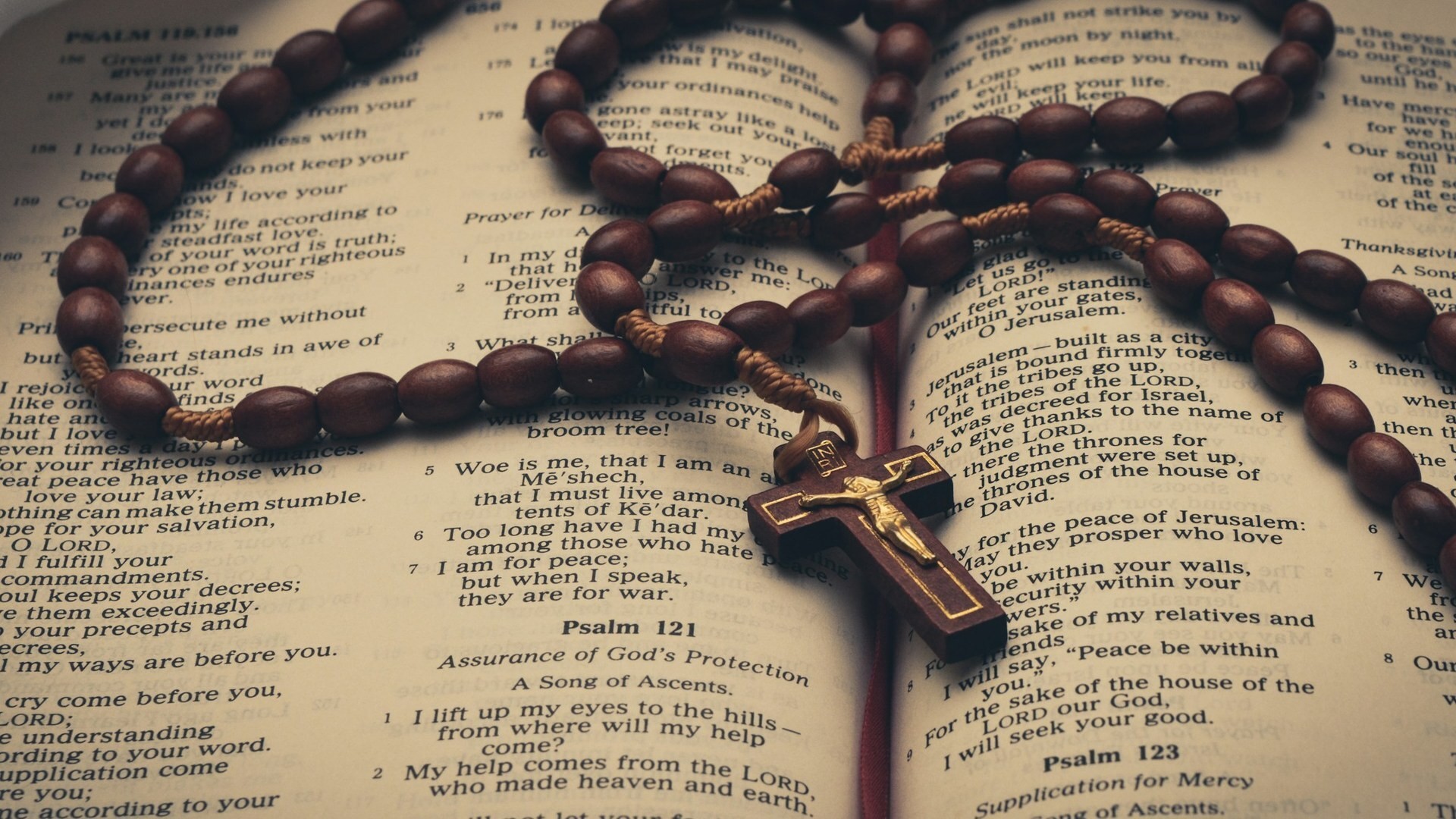
Hero photo by Milada Vigerova on Unsplash.
Scripture quotations are from The Holy Bible, English Standard Version® (ESV®), copyright © 2001 by Crossway, a publishing ministry of Good News Publishers. Used by permission. All rights reserved.
Adapted from a Bible study taught by Pastor James Drake to U.S. soldiers while deployed overseas, May 2026 (“Biblical Healing” study). Services Sundays at 11 AM at 8485 SW 112th St, Miami, FL 33156.
Frequently asked questions
Did Jesus Actually Heal People?
Will There Ever Be a Day With No More Pain?
Pastoral writing from the team at Christchurch Miami — a faith family on mission in Kendall, Miami.