





Holidays
A Christmas Parable
December leaves preachers scrambling for something new to say about Christmas. Here's a parable about a father, his children, and their presents — a mirror for how we actually receive God's gifts.
December is crunch time for preachers. Have some sympathy for us, will you? How would you like to try to think of something new and fresh to say about Christmas?
As I was scratching my head, wondering what I could possibly offer that hasn’t been said a million times before, I stumbled upon this little-known fragment from the Dead Sea scrolls. It’s almost unbelievable how contemporary it feels. What do you think?
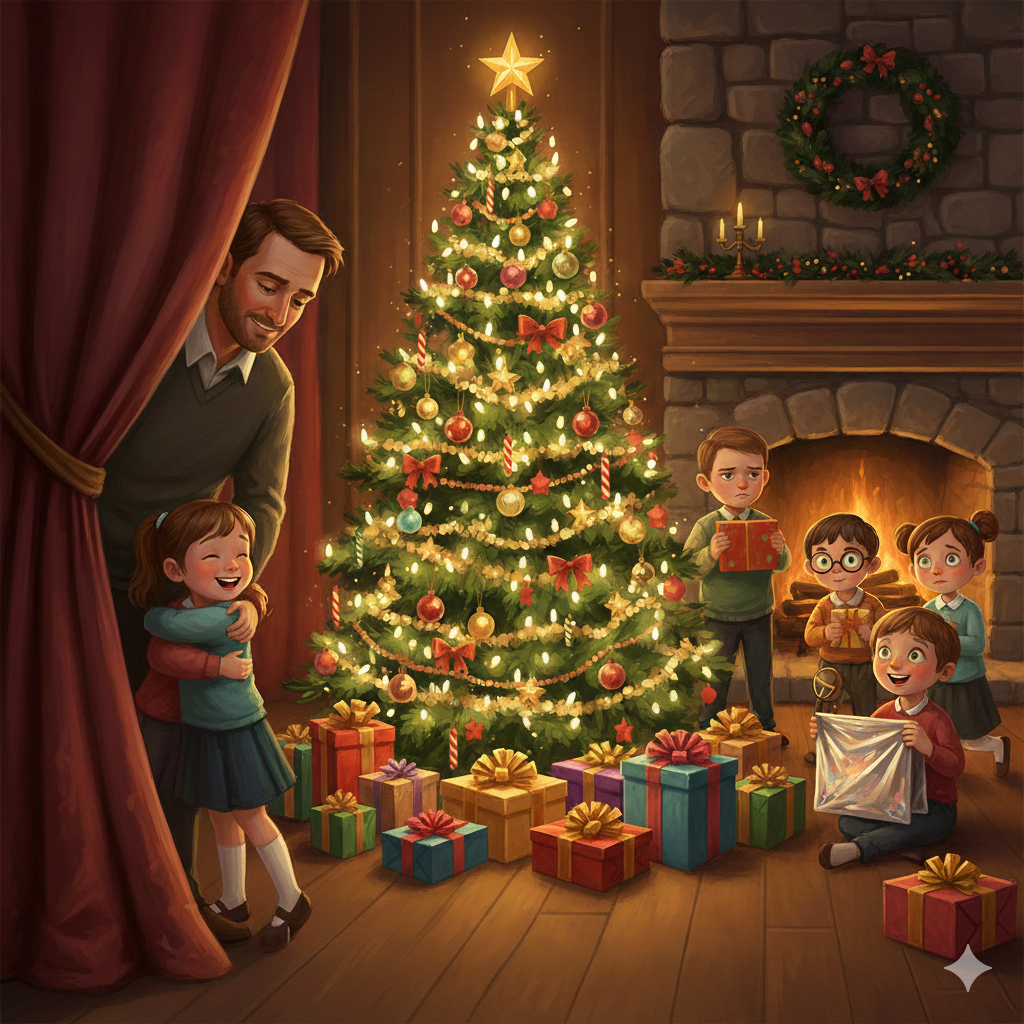
*Yea verily, saith the Preacher. There was a certain man who had a lot of children. On Christmas morning he left presents for each of them underneath the tree, and then found he a hiding place where, unbeknownst to them, he could watch them open their presents.
His shallow child picked up her present, and instead of opening it, just sat on the floor holding it and saying over and over, “Ooh, shiny … look at the pretty wrapping paper!”
His critical child took his in his hands and said, “Mine’s not wrapped very well. The edges are all crooked, the tape is very sloppy, and the bow does not match the paper at all.”
His materialistic child said, “I certainly hope Daddy spent more on me this year than he did last year.”
His vain child said, “Oh, I hope it’s a coupon for another trip to the cosmetic surgeon!”
His neurotic child said, “Oh no! I didn’t get him anything in return!”
His militant child said, “I cannot believe my father succumbed in this way to the crass, materialistic manipulation of our greedy, consumer-driven society.”
His analytical child said, “Giving us these presents must address some heretofore unmet need and/or unresolved conflict from Father’s own childhood, just as Freud suspected …” and would have continued on in this manner, but, yea verily, several of the other children stuffed their bows in his mouth.
His skeptical child said, “A present, huh? I wonder what the catch is.”
And his cynical child said, “Ha! What a bunch of suckers you all are. I’m sure
there’s absolutely nothing in these boxes at all. And about them coming from
this ‘Father’ figure – I have my doubts about that, too. Do you see him
anywhere around here?”
But his youngest child found her present, picked it up, and without even
opening it, made careful search until she found her father where he was
hiding. “Oh Daddy,” she said, “Thank you so much for remembering to give
me a gift this Christmas.”
“Don’t you want to open it before you say, `Thank you’?” said the father. “You
might not like what I got you.”
“No, Daddy,” she replied. “It doesn’t matter what you got me. I’m just grateful
to be your child.” And lo, the two of them hugged and had a wonderful
Christmas morning.
The rest of the little wretches he kicked out into the street and said, “Get a
job, brats! In fact, go get a bunch of jobs, you ungrateful little snots …”
Not really. He didn’t really kick them out. In fact, he still loved all of them,
even though they often did act like ungrateful little wretches.
But he enjoyed spending time with his youngest child more. And verily, canst
thou blameth him?*
Eerie, isn’t it? I guess there really isn’t anything new under the sun.
Have a wonderful, blessed – and grateful – Christmas and New Year’s.
Pastor Kent
Frequently asked questions
What is Pastor Kent Keller's Christmas parable about?
What is the spiritual lesson of the youngest child in the Christmas parable?
Why do preachers say December is 'crunch time'?
Pastoral writing from the team at Christchurch Miami — a faith family on mission in Kendall, Miami.