




Sermon Blog
What Did Jesus Mean by "Poor in Spirit"? Understanding the Beatitudes
What did Jesus mean by "blessed are the poor in spirit"? In Matthew 5, Jesus turns the world upside down — and shows you can't achieve blessing, only receive it.
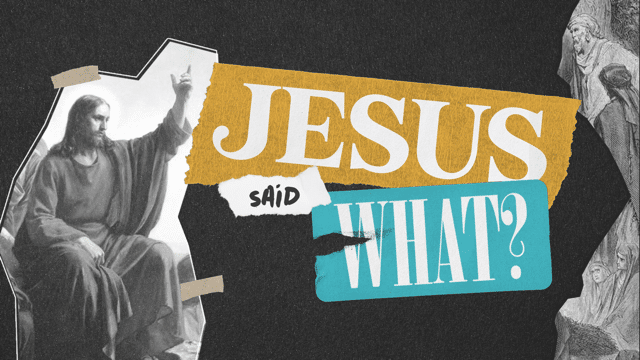
After 400 years of silence from God, Jesus broke that silence with His first recorded sermon — and the very first word out of His mouth was not “Cursed.” It was “Blessed.” Now think about that for a second. The Old Testament ends in Malachi 4:6 with a warning about a curse, and then God goes quiet for four centuries. Four hundred years of pain, agony, disappointment, His people wondering, Where is God? What did we do? What are we going to do? And then Christ steps onto the scene — the Lamb of God who would take away the sins of the world — and His opening line isn’t a rebuke. It’s a blessing. That tells you everything about His heart. I’m Pastor James Drake, and this Sunday at Christchurch we kicked off a new series in the Sermon on the Mount we’re calling Jesus Said What? — because Jesus has a way of taking this world and turning it upside down and inside out.
”Jesus Said What?” — A Better Message for a Broken World
Here’s the thing you have to understand about the Sermon on the Mount. It’s twelve minutes long cover to cover, and more libraries have been written on it than on any other sermon in history. It has a ring of truth to it — you feel it the moment you read it. But it’ll also leave you scratching your head, thinking, Wait, Jesus said what*?* And I want you to know something: Kent and I have a high view of this book. We believe it’s God’s Word, and we’ll always teach it. But we’ve got questions too, just like you. No matter where you’re coming from, what you believe or don’t believe, you’re welcome here. We feed God’s sheep, and we always keep a seat at the table for anyone still exploring whether this God thing is real.
Let me read you the text. This is where it all starts:
“Seeing the crowds, he went up on the mountain, and when he sat down, his disciples came to him. And he opened his mouth and taught them, saying: ‘Blessed are the poor in spirit, for theirs is the kingdom of heaven. Blessed are those who mourn, for they shall be comforted. Blessed are the meek, for they shall inherit the earth. Blessed are those who hunger and thirst for righteousness, for they shall be satisfied. Blessed are the merciful, for they shall receive mercy. Blessed are the pure in heart, for they shall see God. Blessed are the peacemakers, for they shall be called sons of God. Blessed are those who are persecuted for righteousness’ sake, for theirs is the kingdom of heaven…’” — Matthew 5:1-12
This is Jesus’ first recorded sermon in the first Gospel. And where does He begin? Not with the wealthy, the powerful, or the impressive. He begins with the poor in spirit. So let me tell you up front where this whole thing is going — if you need a nap, you can take it now, because I’m giving you the ending first: you can’t achieve happiness, and you can’t achieve being blessed. You can only receive it from Christ. That’s the whole point of the Beatitudes. Hold onto that, because everything else hangs on it.
What Does “Blessed” Even Mean? Happiness You Can’t Manufacture
I’ll be honest with you — I got rebuked in my study this week. For years I’ve told people, “God is all about your holiness, not your happiness.” And there’s some truth in that. But the word “blessed,” which Jesus repeats nine times in this text, is the Greek word makarios — and it can be translated happy. Not a shallow, superficial happiness. A deep, abiding happiness and joy with a sense of purpose and wholeness. Happy are you. Happy are you. Happy are you.
Now picture who Jesus was talking to. People who lived on average to 35. One in four of their children died in infancy. No dentists, no banks, an oppressive Roman regime breathing down their necks. They were just trying to make ends meet. Jesus could have opened with a thousand things. Instead, He went straight to the felt need buried in every human heart: What is the purpose of this life? Why am I here? Why are there longings in my soul that nothing seems to satisfy? Harvard’s most popular class was once called “The Science of Happiness.” Yale copied it, and a thousand students enrolled on day one. We are not unique in our longing — and that’s exactly the longing Jesus came to answer.
Blessed Are the Poor in Spirit — The Doorway In
Then He says it: “Blessed are the poor in spirit.” And the crowd would’ve thought what you’re probably thinking: Jesus said what*?* The poor in spirit? But this is where everything begins. To be poor in spirit isn’t about your bank account — it’s about a posture of humility. The poor in spirit realize they can’t save themselves. They need Christ to do for them what they can’t do for themselves — and notice this, not only to save them, but to sustain them.
I can’t help but think of Cain and Abel, the first two children of Adam and Eve. Cain came before God with his best — a religious man doing whatever he could to earn his way — and God rejected it. Abel came not with his best efforts but with a sacrifice, trusting that only a sacrifice could cover his sin. And God was pleased. Then Cain did what religious people always do when their performance gets exposed: he acted out in self-justification, and he killed his brother. That’s what religion does. It might make you feel good, but it never deals with the heart. To be poor in spirit is to come to God with empty hands and admit you have nothing to offer except your need. And right there, in that humility, God meets you. This is the doorway into every other Beatitude.
Mourning, Meekness, and a World Turned Upside Down
Then He keeps going, and it keeps sounding backward. “Blessed are those who mourn.” A woman once asked me to pray that her daughter would feel pain. Imagine that. But her daughter had a condition where her nerves didn’t fire — she’d put her hand on a hot stove and not know until she smelled it burning, step on glass and not feel it. There’s purpose in pain. Our pain reminds us our hearts are still alive, that this world is broken and not yet as it ought to be. Psalm 34:18 says God is near the brokenhearted. We don’t mourn without hope — but we do mourn, and Christ says, I’m near you. I hear you.
“Blessed are the meek.” Meek, not weak. Meekness is controlled strength. I saw a clip this week that captured it perfectly — Shohei Ohtani takes a 100-mile-per-hour pitch thrown right at him, and instead of charging the mound and emptying the dugouts into a brawl, he turns and waves his own teammates off. Stay put. Calm down. He had every right to retaliate and the power to do it, and he held it under control. That’s meekness. God isn’t calling you to be a doormat. He’s calling you to be strong and controlled.
“Blessed are those who hunger and thirst for righteousness.” That’s the cry of a heart that says, God, will you make things right? Will you make things whole? It’s Psalm 42:1 — “As a deer pants for flowing streams, so pants my soul for you, O God” — and it’s the very thing Jesus points to in Matthew 6:33: seek first the kingdom, and all these things will be added to you. “Blessed are the merciful” — not giving people what they deserve, reflecting the very heart of our Lord. “Blessed are the pure in heart.” You know that look when you walk up on one of your kids and they suddenly slap the phone face-down against their chest? You don’t have to ask — their actions already told you something’s hidden. That barrier is what sin does in our relationship with God. But the pure in heart have nothing to hide, and so they get to see Him. The irony, of course, is that none of us are pure in heart. Jesus sets the standard so high that none of us can clear it — on purpose — so we’ll stop trying and start receiving.
Peacemakers and the Persecuted — The Currency of the Kingdom
“Blessed are the peacemakers” — not peace fakers, but people who actively work for reconciliation. Heidi and I have spoken to thousands of couples at marriage conferences, and the one thing we keep coming back to is this: a great marriage means learning to fight fair. The Gottman Institute found the first fifteen seconds of a conversation determine the outcome over 90% of the time — start it heated, and it’s almost certainly going to end badly. So back off, lower the temperature, come back with a little more peace. Relationships worth having are worth fighting for, but you have to learn how to seek oneness rather than just being right.
And last: “Blessed are those who are persecuted.” Jesus said what*?* But He meant it. He said if the world rejected Him, don’t expect it to accept you. More Christians have been martyred in the past hundred years than in all the previous centuries combined. Look at Nigeria — over 50,000 believers murdered for their faith in recent decades, more than 7,000 this year alone. And closer to home it shows up in softer forms: a coach who loses his job because he won’t stop kneeling to pray after a game, a baker threatened with jail over their conscience. Persecution is real. And still Jesus calls it blessed, “for theirs is the kingdom of heaven.”
The Twist: Jesus Is the Truly Blessed One
Now here’s the twist, and don’t miss it. You read all eight of these and feel the weight of how far short you fall — and that’s the point. Because Jesus isn’t just the one who taught the Beatitudes. He’s the one who fulfilled every single one of them in your place:
- He was poor in spirit so you could be rich.
- He mourned over His people so they could be saved.
- He was meek and stood silent during His own judgment, in your place.
- He hungered and thirsted for righteousness so you could be satisfied.
- He was merciful, and calls you to extend that mercy to others.
- He is pure in heart, sees God, and intercedes for you.
- He is the Prince of Peace who alone offers real peace (John 14:27).
- He was persecuted so the kingdom of heaven could be yours.
So you’re not blessed by doing something more. You’re blessed by receiving the blessing from Christ our Lord. He understands your deepest needs, and He alone can fill them. As I said this Sunday, you can’t achieve happiness, you can’t achieve being blessed — you can only receive it from Christ. That’s not a loophole. That’s the gospel.
What This Means for Your Week
So what do you do with all of this? Maybe it’s an invitation to focus more on your character than your circumstances. To trust that God can take whatever’s swirling around you and use it for His glory and your good. Don’t just pray, God, do a work around me. Pray, God, do a work in me and through me. And if you’re still exploring, still wondering where you stand with God, remember what Augustine said: “Our hearts are restless until they find rest in thee.” Your deepest hunger and your greatest joy will only ever be found in Christ — so place your faith in Him today. This message kicks off our Jesus Said What? series; you can keep walking through the Sermon on the Mount with us in the next message, You Are Salt and Light. And if anxiety is the thing stealing your rest, we walked through that too in What Did Jesus Say About Anxiety?.
Common Questions About the Beatitudes
What did Jesus mean by “blessed are the poor in spirit”? To be poor in spirit isn’t about your bank account — it’s about spiritual humility. The poor in spirit are the people who know they can’t save themselves and need Christ to do for them what they cannot do for themselves. It’s the first Beatitude for a reason: it’s the doorway into all the others. You come to God with empty hands, admit you have nothing to offer except your need, and there God meets you.
What does “blessed” actually mean in the Beatitudes? The Greek word is makarios, and it can be rendered “happy” — but not a shallow happiness. It’s a deep, abiding happiness and joy with a sense of purpose and wholeness. Jesus could open His first recorded sermon with anything; He chose to speak to the deepest ache of the human heart — the longing for meaning that nothing else satisfies.
Can I achieve the Beatitudes by trying harder? No — and that’s the whole point. You can’t achieve happiness and you can’t achieve being blessed; you can only receive it from Christ. The standard Jesus sets is impossibly high on purpose, so we’ll stop trying to earn it and start receiving it. The Beatitudes aren’t a to-do list; they’re a description of the heart that rests in Christ.
How is Jesus Himself the truly blessed one? Jesus didn’t just teach the Beatitudes — He embodied them so you could share in them. He was poor in spirit so you could be rich. He mourned so His people could be saved. He stood silent and meek during His judgment in your place. He hungered for righteousness so you could be satisfied. Every blessing He pronounced, He purchased.
Why did Jesus begin His ministry with a blessing instead of a curse? The Sermon on the Mount followed 400 years of silence — the Old Testament closes in Malachi with a warning about a curse, then nothing for four centuries. When the Messiah broke the silence with His first sermon, He didn’t open with judgment. He opened with “Blessed.” He came with a better message for a broken world.
What does it mean that the meek are blessed? Meekness is not weakness — it’s controlled strength, power held under control for a higher purpose. Picture a hitter who takes a 100-mph pitch and waves off his own dugout instead of charging the mound. The world says fight back. Jesus says the meek will inherit the earth, because the currency of His kingdom is humility under control, not aggression.
Why are Christians persecuted, and how can that be a blessing? Jesus said it would happen: “Blessed are those who are persecuted for righteousness’ sake.” More Christians have been martyred in the past century than in all the centuries before combined — over 50,000 believers killed for their faith in Nigeria in recent decades alone. Persecution is real, but Jesus calls it blessed because our reward is great in heaven and God can use even suffering for His glory and our good.
Questions for Reflection
- Where in your life are you still trying to earn God’s favor instead of coming to Him empty-handed and simply receiving His grace?
- What would it look like to practice meekness — controlled strength — in a relationship where you’d normally fight back this week?
- Is there something you’re hiding that’s putting a barrier between you and God? What would it mean to come into the light?
- Instead of asking God to fix your circumstances, what would change if you prayed, “Do a work in me and through me”?
Want to keep going on this? You don’t have to figure out the blessed life on your own. Join us this Sunday at 11 AM at 8485 SW 112th St, Miami, and take your next step with a community that’s learning to rest in Christ together. You can also explore more sermons and reflections on our blog.
Credits
Adapted from Pastor James Drake’s November 17, 2025 sermon, “Poor in Spirit = Blessed?”
By Pastor James Drake, Lead Pastor, Christchurch Miami.
Christchurch Miami is a Presbyterian Church in America (PCA) congregation in Miami, Florida, led by Pastor James Drake. Services are held Sundays at 11 AM at 8485 SW 112th St, Miami, FL 33156.
Scripture quotations are from the ESV® Bible (The Holy Bible, English Standard Version®), copyright © 2001 by Crossway, a publishing ministry of Good News Publishers. Used by permission. All rights reserved.
Frequently asked questions
What did Jesus mean by "blessed are the poor in spirit"?
What does "blessed" actually mean in the Beatitudes?
Can I achieve the Beatitudes by trying harder?
How is Jesus Himself the truly blessed one?
Why did Jesus begin His ministry with a blessing instead of a curse?
What does it mean that the meek are blessed?
Why are Christians persecuted, and how can that be a blessing?
Pastoral writing from the team at Christchurch Miami — a faith family on mission in Kendall, Miami.