


Apologetics
Halloween
Halloween carries two histories — a Christian one (All Saints' Eve) and a pagan one (Samhain) — never fully separated. Here's the real origin, and how to mark the night with faith instead of fear.
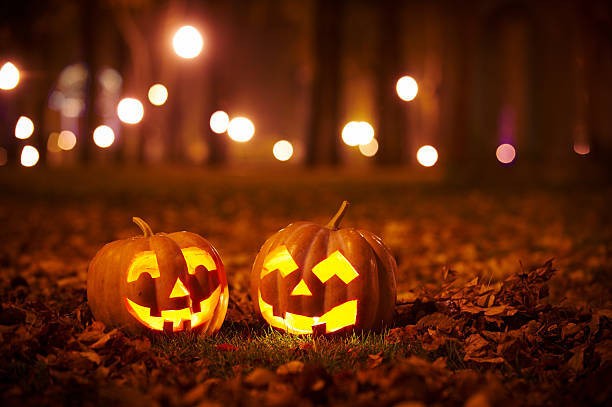
If you are someone who really, really likes Halloween, enjoys costume parties and
thinks life without candy corn, miniature Milky Ways and orange and black lollipops is
just not worth living, allow me to explain briefly where Halloween came from.
Believe it or not …
Halloween was once a Christian event. In medieval times, on November 1st the church observed All Hallows Day, hallow being an Old English word meaning “holy.” (Think of
the Lord’s Prayer: “Our Father, who art in heaven, hallowed be thy name ….”) In the 16thcentury All Hallows Day began to be known as All Saints Day, a day to honor Christians
who had died and already received their eternal reward.
The night before came to be known as All Hallows’ Eve – which has come down to us as Halloween. If that linguistic corruption was all that had changed, Christians today
wouldn’t square off over how to, or if we even should, observe the day (and night).
Unfortunately, Halloween has long since lost any connection with All Saints Day and All Hallows’ Eve, and it has become just another secular party occasion. Even more
unfortunately, it has taken on distinctly unhealthy overtones, with its preoccupation with
death, monsters, the occult and other unbiblical and anti-Christian themes and
practices.
Things that go bump in the night
These things, along with carving jack-o’-lanterns, wearing scary costumes, and going
house to house offering “trick or treat” options, have their roots in ancient pagan
customs, specifically a Celtic festival called Samhain. Like many such pagan festivals
and customs, the church moved in on their turf and seized it for its own. Unfortunately,
when it did it did not cleanse the event of its ungodly and unholy vestiges. Thus we
have our modern / pre-modern event we know as Halloween.
So no, I’m not going to go so far as to say you absolutely, positively cannot enjoy
Halloween, wear strange outfits and go to a party, or door to door with your kids. (Or
without them, if you’re a hard-core candy addict.) (The preceding sentence was brought
to you by your local dentists’ association.) But I will say that if and as you do, it’s a good
opportunity to thank God for his goodness to us in giving us our Christian heritage.
Pray for those who are too interested, in an unhealthy way, with the dark side of
Halloween, or even inducted into some form of paganism, witchcraft, the occult, etc.
Watch the movie “Luther” or “Amazing Grace.” Read CS Lewis’ The Screwtape Letters.
Come worship with us (or your home church – if you don’t have one you’re hereby
invited to mine) as we celebrate our Reformation heritage.
And remember: Greater is he who is in you than he who is in the world (1 John 4:4).
Kent
Frequently asked questions
Should Christians celebrate Halloween?
What is the origin of Halloween?
What can Christians do instead of focusing on the dark side of Halloween?
Pastoral writing from the team at Christchurch Miami — a faith family on mission in Kendall, Miami.