

March 10th, 2026
by Pastor Kent Keller

The Real Saint Patrick*
Sure and begorrah, and top o’ th’ mornin’ to ya ....**
A few years ago, just out of curiosity, I did one of those DNA analyses. Among other surprises I learned I am a lot more Irish than I knew. Therefore allow me to throw a little history your way about the man we call “Saint” Patrick, and why his life means more to us than just an excuse to drink green beer.
(The New Testament teaches that all Christians are “saints” – see Romans 1:7, 1 Corinthians 1:2, Ephesians 1:1, etc.)
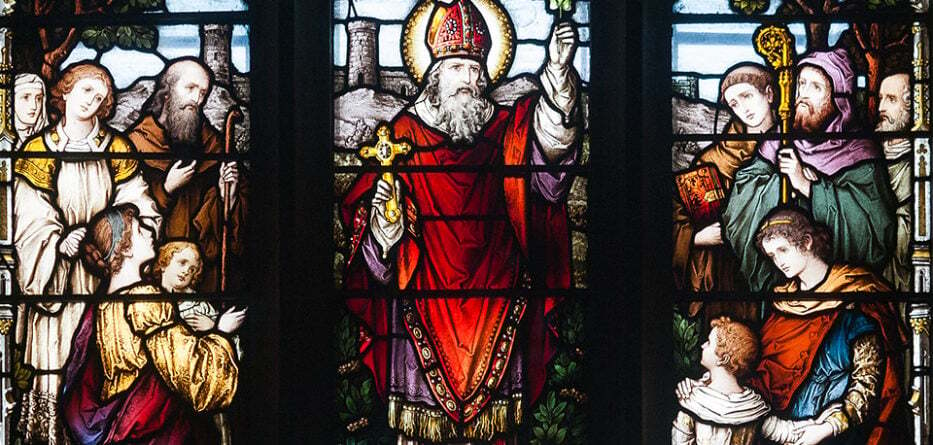
Most people, if they know anything about Patrick at all, probably think he was the man who chased the snakes out of Ireland. You might be surprised to learn that Patrick was not actually Irish – he was born in about 390 A.D. in what was then Roman Britain.
Luck of the Irish?
While he was a teenager, Irish raiders attacked his village and his home. Patrick was captured and taken as a slave to Ireland, where he was sold to an Irish king. That king put him to work as a shepherd.
In How the Irish Saved Civilization, Thomas Cahill describes the life Patrick lived: “The work of such slave-shepherds was bitterly isolated, months at a time spent alone in the hills.” It was during those long, difficult days and months God began a work of grace in the young man’s heart.
Although Patrick had been raised in a Christian home, he didn’t really believe in God. But isolation and deprivation have a way of making a person take a fresh look at his life, his beliefs, his unbeliefs. Patrick began to be open to the God he had previously disregarded. He would later write in his Confessions, “I would pray constantly during the daylight hours ... the love of God . . . surrounded me more and more.”
He had a dream
He would go on to describe how, after six years as a slave, God spoke to him in a dream. Patrick heard God say, “Your hungers are rewarded. You are going home. Look – your ship is ready.” If he followed the message of the dream and ran away, he would become a fugitive slave. His life would be in constant danger. Recapture would result in the harshest kinds of punishment. But he did obey – and with God’s sovereign protection safely traveled on foot the almost 200 miles to the Irish coast. There he found the promised ship waiting for him, boarded it and made it back home to Britain and his family.
Patrick went home a changed man. He could not just go back to his old life. He realized that God was calling him to enter a monastery. In time, he was ordained as a priest, then a bishop. Remarkably, in a way that only God can, 30 years after God had rescued Patrick from Ireland, he sent him back as a missionary.
You think your mission field’s tough ...
The Irish of the fifth century were pagans: violent, barbaric, even practicing human sacrifice. Patrick knew what he was getting himself into. He wrote: “I am ready to be murdered, betrayed, enslaved – whatever may come my way.” Patrick actually grew to love the very people among whom he had once been a slave. Cahill writes that Patrick’s love “shines through his writings . . . He [worried] constantly for his people, not just for their spiritual but for their physical welfare.”
God used Patrick to bring thousands of Irish souls into the Kingdom of God. Not only did he bring Christianity to Ireland, he also instilled a sense of literacy and learning that would create the conditions that allowed Ireland to become "the isle of saints and scholars" – thus preserving Western culture while at the same time Europe was being overrun by barbarians.
Cahill again: “Only this former slave had the right instincts to impart to the Irish a New Story, one that made sense of all their old stories and brought them a peace they had never known before.” Through his preaching, teaching and yes, shepherding, a pagan, warlike people “lay down the swords of battle, flung away the knives of sacrifice.” As Patrick had so many years before, they “cast away the chains of slavery.”
Enjoy that cabbage (far, far away from me, please)
This St. Patrick’s Day, by all means wear green if you feel like it; many Protestants opt for orange in honor of our heritage. Eat corned beef (and cabbage if you must; just please – nowhere near me, OK?), and have a green beer if you are so inclined. But as you do, please remember this heroic forebear in the faith and how he, at great personal risk, followed God’s leading and helped advance his Kingdom into an incredibly hostile pagan land.
No, Patrick didn’t chase the snakes out of Ireland. Instead, God used him to bring to the Irish the good news of the Gospel of Jesus Christ, forever changing the Irish people and even the course of history.
Pastor Kent Keller
*I am much indebted to Chuck Colson’s Breakpoint ministry and Thomas Cahill’s How the Irish Saved Civilization for the contents of this blog.
**An Irish friend informs me no self-respecting Irishman would ever, ever utter these words.
Bonus – Irish blessings
(The New Testament teaches that all Christians are “saints” – see Romans 1:7, 1 Corinthians 1:2, Ephesians 1:1, etc.)
Most people, if they know anything about Patrick at all, probably think he was the man who chased the snakes out of Ireland. You might be surprised to learn that Patrick was not actually Irish – he was born in about 390 A.D. in what was then Roman Britain.
Luck of the Irish?
While he was a teenager, Irish raiders attacked his village and his home. Patrick was captured and taken as a slave to Ireland, where he was sold to an Irish king. That king put him to work as a shepherd.
In How the Irish Saved Civilization, Thomas Cahill describes the life Patrick lived: “The work of such slave-shepherds was bitterly isolated, months at a time spent alone in the hills.” It was during those long, difficult days and months God began a work of grace in the young man’s heart.
Although Patrick had been raised in a Christian home, he didn’t really believe in God. But isolation and deprivation have a way of making a person take a fresh look at his life, his beliefs, his unbeliefs. Patrick began to be open to the God he had previously disregarded. He would later write in his Confessions, “I would pray constantly during the daylight hours ... the love of God . . . surrounded me more and more.”
He had a dream
He would go on to describe how, after six years as a slave, God spoke to him in a dream. Patrick heard God say, “Your hungers are rewarded. You are going home. Look – your ship is ready.” If he followed the message of the dream and ran away, he would become a fugitive slave. His life would be in constant danger. Recapture would result in the harshest kinds of punishment. But he did obey – and with God’s sovereign protection safely traveled on foot the almost 200 miles to the Irish coast. There he found the promised ship waiting for him, boarded it and made it back home to Britain and his family.
Patrick went home a changed man. He could not just go back to his old life. He realized that God was calling him to enter a monastery. In time, he was ordained as a priest, then a bishop. Remarkably, in a way that only God can, 30 years after God had rescued Patrick from Ireland, he sent him back as a missionary.
You think your mission field’s tough ...
The Irish of the fifth century were pagans: violent, barbaric, even practicing human sacrifice. Patrick knew what he was getting himself into. He wrote: “I am ready to be murdered, betrayed, enslaved – whatever may come my way.” Patrick actually grew to love the very people among whom he had once been a slave. Cahill writes that Patrick’s love “shines through his writings . . . He [worried] constantly for his people, not just for their spiritual but for their physical welfare.”
God used Patrick to bring thousands of Irish souls into the Kingdom of God. Not only did he bring Christianity to Ireland, he also instilled a sense of literacy and learning that would create the conditions that allowed Ireland to become "the isle of saints and scholars" – thus preserving Western culture while at the same time Europe was being overrun by barbarians.
Cahill again: “Only this former slave had the right instincts to impart to the Irish a New Story, one that made sense of all their old stories and brought them a peace they had never known before.” Through his preaching, teaching and yes, shepherding, a pagan, warlike people “lay down the swords of battle, flung away the knives of sacrifice.” As Patrick had so many years before, they “cast away the chains of slavery.”
Enjoy that cabbage (far, far away from me, please)
This St. Patrick’s Day, by all means wear green if you feel like it; many Protestants opt for orange in honor of our heritage. Eat corned beef (and cabbage if you must; just please – nowhere near me, OK?), and have a green beer if you are so inclined. But as you do, please remember this heroic forebear in the faith and how he, at great personal risk, followed God’s leading and helped advance his Kingdom into an incredibly hostile pagan land.
No, Patrick didn’t chase the snakes out of Ireland. Instead, God used him to bring to the Irish the good news of the Gospel of Jesus Christ, forever changing the Irish people and even the course of history.
Pastor Kent Keller
*I am much indebted to Chuck Colson’s Breakpoint ministry and Thomas Cahill’s How the Irish Saved Civilization for the contents of this blog.
**An Irish friend informs me no self-respecting Irishman would ever, ever utter these words.
Bonus – Irish blessings
You are probably familiar with that Irish blessing that says:
“May the road rise up to meet you.
May the wind be always at your back.
May the sun shine warm upon your face;
the rains fall soft upon your fields and until we meet again,
may God hold you in the palm of His hand.”
Here are some that may be slightly less familiar:
“May those that love us, love us,
and those who don't love us,
may God turn their hearts,
and if He can't turn their hearts,
may He turn their ankles,
so we know them by their limping.”
"May you have the hindsight to know where you've been,
the foresight to know where you're going
and the insight to know when you're going too far."
"May you live to be a hundred years, with one extra year to repent."
"May the saddest day of your future
be no worse than the happiest day of your past."
"May the blessings of each day be the blessings you need the most."
"As you slide down the banisters of life,
may the splinters never point the wrong way."
“May the road rise up to meet you.
May the wind be always at your back.
May the sun shine warm upon your face;
the rains fall soft upon your fields and until we meet again,
may God hold you in the palm of His hand.”
Here are some that may be slightly less familiar:
“May those that love us, love us,
and those who don't love us,
may God turn their hearts,
and if He can't turn their hearts,
may He turn their ankles,
so we know them by their limping.”
"May you have the hindsight to know where you've been,
the foresight to know where you're going
and the insight to know when you're going too far."
"May you live to be a hundred years, with one extra year to repent."
"May the saddest day of your future
be no worse than the happiest day of your past."
"May the blessings of each day be the blessings you need the most."
"As you slide down the banisters of life,
may the splinters never point the wrong way."
Top o’ th’ mornin’ to ya.
Posted in Church History, History, Holidays, Kent Keller
Posted in st Patrick, Church History, Irish
Recent
Should Christians Be Christian Nationalists?
April 29th, 2026
What Does the Bible Say About Anxiety?
April 26th, 2026
You Are Salt and Light: Why the Resurrection Still Matters
April 19th, 2026
Did Jesus Really Rise From the Dead? The Evidence From 1 Corinthians 15
April 12th, 2026
The Shroud of Turin*
April 5th, 2026
Archive
2026
January
Going the Second Mile: Living Beyond What the World ExpectsGood VibrationsLearning to Love Your Enemies: Lessons from the Second MileThoughts on Martin Luther King Jr.’s “Letter From A Birmingham Jail”Human TraffickingWhy Do You Give? Living for God's Approval Rather Than Man's ApplauseHow to Pray Authentically: Lessons from the Lord's PrayerBlack History Month
February
March
When Following Jesus Gets Hard: Finding God's Guidance Through PrayerThe Golden Rule: A New Way of LivingThe Real Saint Patrick*Earth in the BalanceBeware of False Prophets: How to Recognize Truth from DeceptionBuilding Your Life on the Right Foundation: A Warning About False FaithTrue vs False Christianity: How to Know If Your Faith Is RealEarth in the Balance, Part 2Summer SolsticeDetails, DetailsMoonstruckThe Week that Changed Everything: Understanding Palm Sunday
April
It's Sunday, But Friday is ComingPassover: Covered By The BloodDid Jesus Really Rise from the Dead? | Road to Emmaus ExplainedThe Shroud of Turin*Did Jesus Really Rise From the Dead? The Evidence From 1 Corinthians 15You Are Salt and Light: Why the Resurrection Still MattersWhat Does the Bible Say About Anxiety?Should Christians Be Christian Nationalists?
2025
October
November
Mission Must Be Our Mindset: Living as Ambassadors for ChristWhat Does It Mean to Worship God in Spirit and Truth?Just WarWhat Do We Have To Be Thankful For?What Did Jesus Really Mean? Understanding the BeatitudesGeorge Washington's 1789 Thanksgiving ProclamationYou Are Salt and Light: How to Live as Kingdom Citizens in a Dark WorldUnderstanding Jesus and the Law: Why Christ Came to Fulfill, Not Abolish
December
Finding Peace in the Midst of Christmas Chaos: What Jesus Taught About AngerUnderstanding Jesus' Teaching on Lust and Adultery: A Christmas MessageA Christmas ParableWinter SolsticeThe Quiet Faithfulness of Joseph: A Christmas Message of Trust and ObedienceWhy Your Word Should Be Your Bond: Jesus' Teaching on Truth and Integrity
Categories
Tags
1 Corinthians 15
2 Chronicles 7:14
American History
Bible study
Black History Month
Black History
Christchurch Miami
Christian nationalism
Christians and politics
Church History
Church
Civil Rights
Earth
February
George washington
God
Human Trafficking
Human
IJM
Intelligent Design
Iran
Irish
Israel
Jail
James Drake
Jesus
Kent Keller
Letter
MLK
Martin Luther King Jr
Martin Luther
Moon
Nation
Parable
Pastor James Drake
Presidents Day
President
Proclamation
Reformation
Science
Sheep
Shepherd
Shroud
Summer
Sun
Thankful
Thanksgiving
Turin
USA
United States
Universe
Wellspring
What About
apologetics
biblical patriotism
christmas
citizenship in heaven
conflict
empty tomb
faith and country
halloween
history
holidays
humor
military
new Christian
render to Caesar
resurrection evidence
resurrection
solstice
st Patrick
war
winter

1 Comment
St. Patrick is my fav missionary besides Andy and KK. ☘️