




History
Thoughts on Martin Luther King Jr.'s “Letter From A Birmingham Jail”
Every MLK Day, Pastor Kent Keller revisits King's 1963 Letter from a Birmingham Jail — its case for just and unjust laws, and its convicting charge that silence from good people is itself a sin.
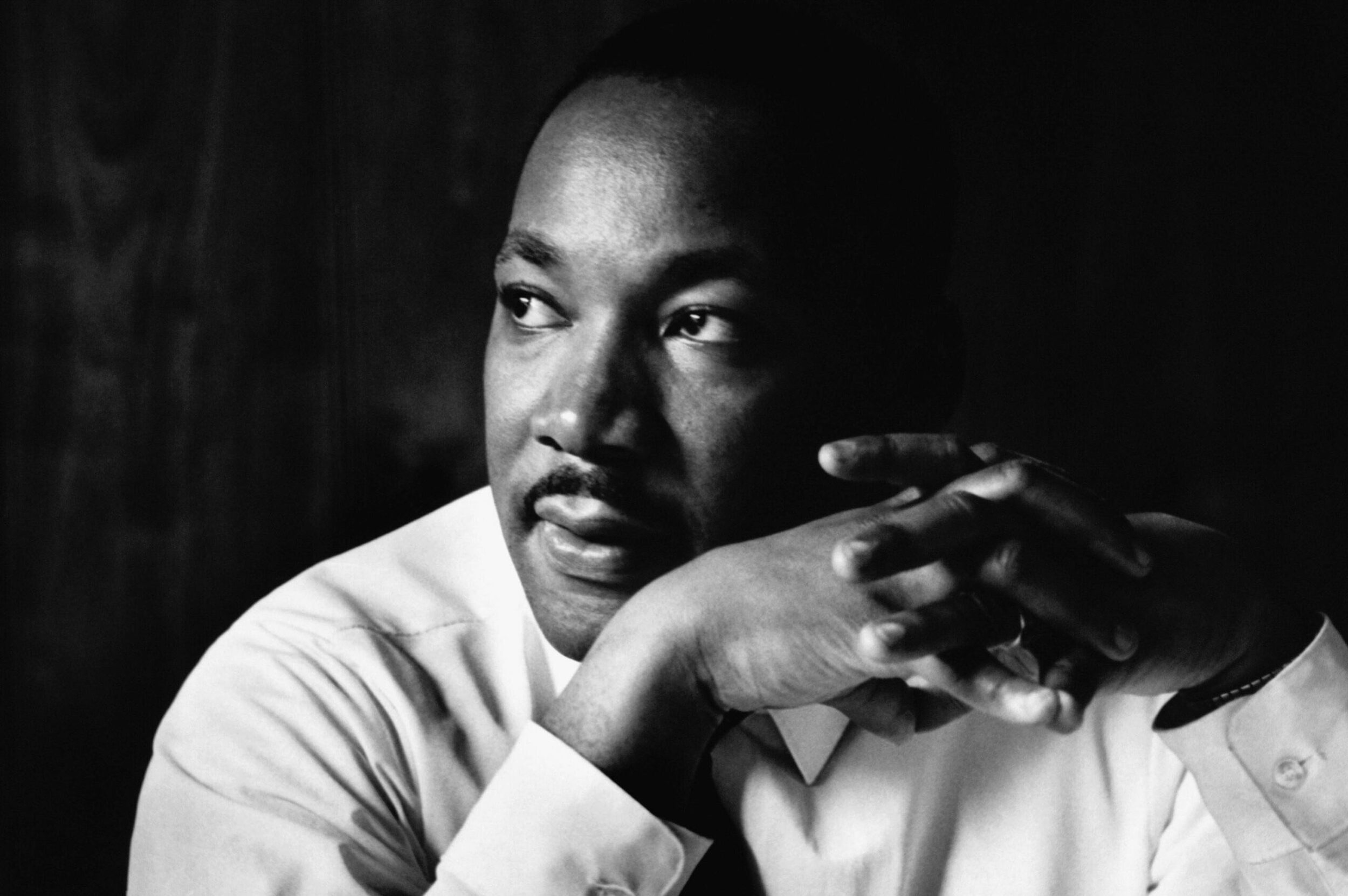
Every year, as we celebrate Martin Luther King Jr. Day, I recommend reading his remarkable “Letter From A Birmingham Jail.” I am recommending it again this year.
This letter, written April 16, 1963 from a jail cell in Birmingham (and substantially redacted later), is convicting, inspiring, and motivating. I point out a few highlights in hopes that they might whet your appetite to read it in its entirety.
(Here’s a link: http://www.africa.upenn.edu/Articles_Gen/Letter_Birmingham.html.)
*I am in Birmingham because injustice is here. Just as the prophets of the eighth century B.C. left their villages and carried their “thus saith the Lord” far beyond the boundaries of their home towns, and just as the Apostle Paul left his village of Tarsus and carried the gospel of Jesus Christ to the far corners of the Greco Roman world, so am I compelled to carry the gospel of freedom beyond my own home town. Like Paul, I must constantly respond to the Macedonian call for aid. …
Injustice anywhere is a threat to justice everywhere. …
One may well ask: “How can you advocate breaking some laws and obeying
others?” The answer lies in the fact that there are two types of laws: just and unjust. I would be the first to advocate obeying just laws. One has not only a legal but a moral responsibility to obey just laws. Conversely, one has a moral responsibility to disobey unjust laws. I would agree with St. Augustine that “an unjust law is no law at all.” …
Now, what is the difference between the two? How does one determine whether a law is just or unjust? A just law is a man made code that squares with the moral law or the law of God. An unjust law is a code that is out of harmony with the moral law. To put it in the terms of St. Thomas Aquinas: An unjust law is a human law that is not rooted in eternal law and natural law.
One who breaks an unjust law must do so openly, lovingly, and with a willingness to accept the penalty. I submit that an individual who breaks a law that conscience tells him is unjust, and who willingly accepts the penalty of imprisonment in order to arouse the conscience of the community over its injustice, is in reality expressing the highest respect for law. …
We will have to repent in this generation not merely for the hateful words and actions of the bad people but for the appalling silence of the good people. …
I must honestly reiterate that I have been disappointed with the church. I do not say this as one of those negative critics who can always find something wrong with the church. I say this as a minister of the gospel, who loves the church; who was nurtured in its bosom; who has been sustained by its spiritual blessings and who will remain true to it as long as the cord of life shall lengthen. …
[But] some [in the church] have been outright opponents, refusing to understand the freedom movement and misrepresenting its leaders; all too many others have been more cautious than courageous and have remained silent behind the anesthetizing security of stained glass windows. …
In deep disappointment I have wept over the laxity of the church. But … my tears have been tears of love. There can be no deep disappointment where there is not deep love. Yes, I love the church. How could I do otherwise? … I see the church as the body of Christ. But, oh! How we have blemished and scarred that body through social neglect and through fear of being nonconformists.
There was a time when the church was very powerful – in the time when the early Christians rejoiced at being deemed worthy to suffer for what they believed. In those days the church was not merely a thermometer that recorded the ideas and principles of popular opinion; it was a thermostat that transformed the mores of society. Whenever the early Christians entered a town, the people in power became disturbed and immediately sought to convict the Christians for being “disturbers of the peace” and “outside agitators.” But the Christians pressed on, in the conviction that they were “a colony of heaven,” called to obey God rather than man. Small in number, they were big in commitment. They were too God-intoxicated to be “astronomically intimidated.” By their effort and example they brought an end to such ancient evils as infanticide and gladiatorial contests.
Things are different now. So often the contemporary church is a weak, ineffectual voice with an uncertain sound. So often it is an arch-defender of the status quo. Far from being disturbed by the presence of the church, the power structure of the average community is consoled by the church’s silent – and often even vocal – sanction of things as they are. …
If today’s church does not recapture the sacrificial spirit of the early church, it will lose its authenticity, forfeit the loyalty of millions, and be dismissed as an irrelevant social club with no meaning for the twentieth century. Every day I meet young people whose disappointment with the church has turned into outright disgust.
Perhaps I have once again been too optimistic. Is organized religion too inextricably bound to the status quo to save our nation and the world? Perhaps I must turn my faith to the inner spiritual church, the church within the church, as the true ekklesia and the hope of the world. But again I am thankful to God that some noble souls from the ranks of organized religion have broken loose from the paralyzing chains of conformity and joined us as active partners in the struggle for freedom. … Yes, they have gone to jail with us. Some have been dismissed from their churches, have lost
the support of their bishops and fellow ministers. But they have acted in the faith that right defeated is stronger than evil triumphant. Their witness has been the spiritual salt that has preserved the true meaning of the gospel in these troubled times.*
As we again honor Dr. King, I commend to you his remarkable “Letter From A Birmingham Jail.”
Kent
Frequently asked questions
What can Christians learn from MLK's Letter from Birmingham Jail?
What did Dr. King mean by just laws and unjust laws?
Why was Dr. King disappointed with the church?
What did Dr. King mean by 'injustice anywhere is a threat to justice everywhere'?
Pastoral writing from the team at Christchurch Miami — a faith family on mission in Kendall, Miami.