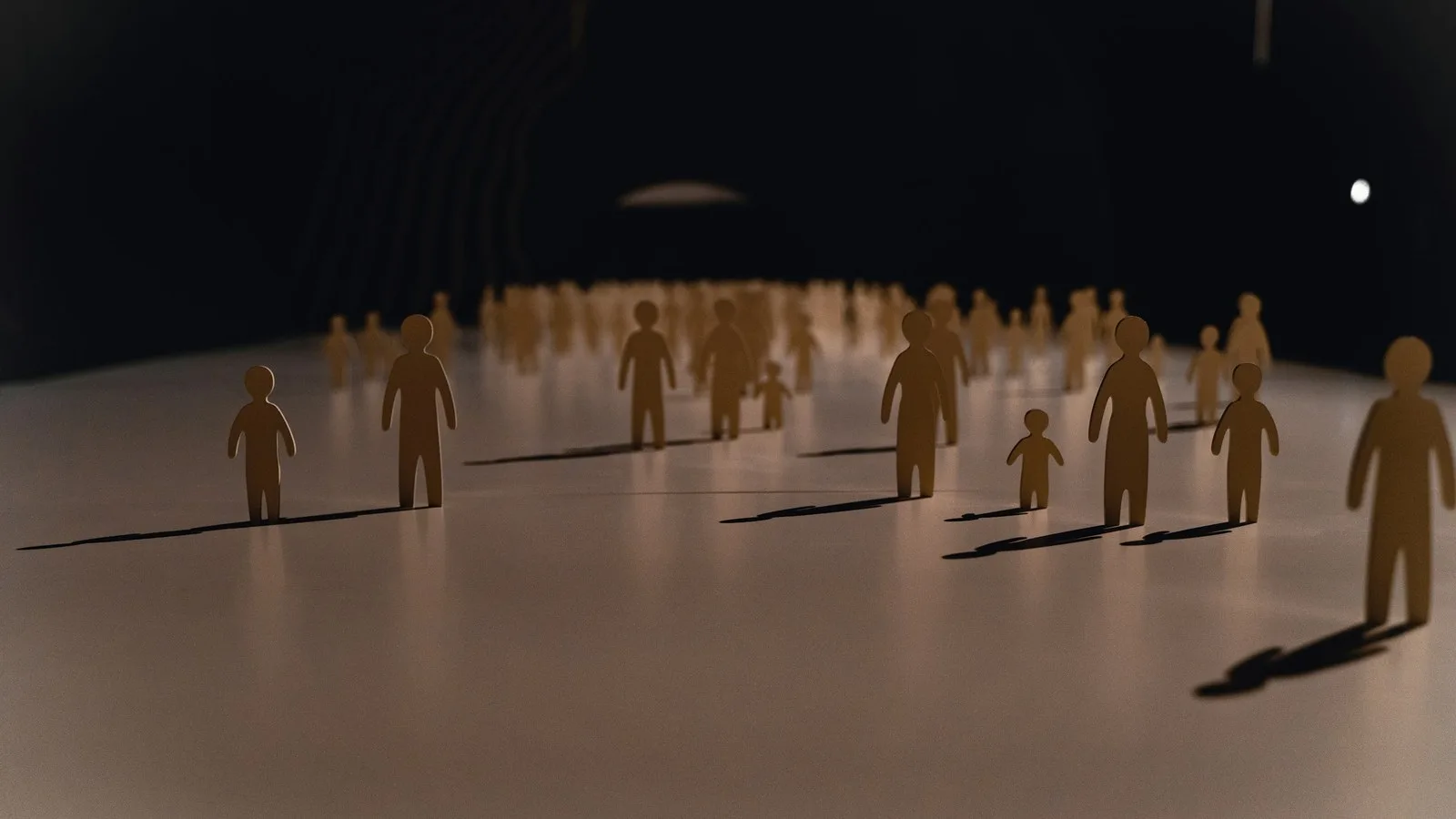


In 426 A.D., Augustine — some people call him St. Augustine, and if you ever get them confused, St. Augustine is in Florida; this Augustine is in heaven — wrote a book called City of God. After the Bible itself, it is the most influential work in all of Western civilization, and in it he tells, long before Dickens ever did, a tale of two cities. There is the city of man, formed by love of self to the point of contempt for God, and there is the city of God, formed by love of God to the point of contempt for self. And here in Genesis 11, on the plains of Shinar in modern-day Iraq, we get an early, rather primitive description of the city of man — a prototype of every city since that has been dedicated to the glory of man.
A tale of two cities
Genesis 11 is a long chapter with a lot of names in it, and I read every one of them. But notice what it is not. Myths and legends begin with "once upon a time" or "long ago in a galaxy far, far away." They do not give you dates and places and genealogies. This chapter does — we can put a timestamp on it, somewhere around 2,000 to 2,100 B.C. Our faith is a matter of acts and facts, and Babel is an early one.
A foundation of human pride
The first thing to see is that this city is built on a foundation of human pride. C.S. Lewis draws a helpful distinction for us. There is a kind of pride that is simply the opposite of shame — the pride you take in your family, your country, a job done well. That kind is good. But there is another kind that is the opposite of humility, and it has older names: arrogance, hubris. That is the pride the Bible condemns over and over, the pride that goes before a fall. Babel was built on the second kind.
We have seen a graphic exhibit of it this very week. There is a video game out now, Grand Theft Auto VI, set in a version of this city I love so much, and it glories in the very things that should be shameful. It made me think of Paul's words in Philippians 3: there are those whose god is their appetite, whose glory is their shame. That breaks my heart. And we in this church are doing what we can to see Miami known for its virtue instead of its vice.
Look closely at verse 4. "Let us make a name for ourselves." The Hebrew word for name is shem — and chapters earlier, God had blessed Noah's son Shem by that very name. So these builders say, in effect, You have a blessed line through Shem? We will make a shem of our own. They did make a name for themselves — just not the one they were hoping for.
A temple for the worship of self
There is a second difference between the two cities. The city of man is built as a temple for the worship of self — the religion of selfism, a shrine to the human ego. Now hear me carefully: I am not anti-technology. I use a phone and a computer every day, and I am sitting on about $35,000 of modern rehabilitative engineering. Technology is a wonderful servant. It just makes a lousy God. And in our time we have let the servant run the house, until we equate speed and efficiency with what is good. But God says, "Be still, and know that I am God." When, in the mad rush of urban life, do we take the time to do that? He is not willing to be just another item on your to-do list.
I picture the city of man like a domed stadium with a retractable roof. Most of the time we keep the roof closed, absorbed in whatever game we are playing. Then a crisis comes — the report from the doctor, the thing we cannot fix — and we crank the roof open and cry, "God, I need You now." A lot of us are functional atheists: we rock along just fine, certain we are in control, until something happens and we discover we never were. My admonition to you and to me is this: do not wait until that day to look up. Open the roof now. Realize who is really in control, and who loves you the most.
Man is the measure of all things
The city of man is built on a charter that reads, straight out of the Enlightenment, that man is the measure of all things. The builders of Babel wanted a tower reaching to heaven; archaeology tells us it stood about 300 feet — a football field stood on end. I do not think heaven was too threatened. In Hebrew the name means "gate of the gods." So God decides to do an on-site inspection — He has to come all the way down to see what they have made — and He does not destroy the city as He later destroys Sodom. He simply confuses their language and scatters them. He is not threatened by the tower. He is saddened by it. "I gave you all this ability and these materials, and this is what you do with it?"
That word matters: stewardship. Imagine a wealthy parent who loans you a priceless, mint-condition sports car and says, "It's yours to enjoy, but one day you'll bring it back to Me." God has given us the whole world as exactly that kind of loan, and we are accountable to Him for how we treat it.
A city built by God
The men of Babel wanted to make a name for themselves. But turn one page, to Genesis 12, and watch what God does with Abram: "I will make your name great, so that you will be a blessing." That is the whole contrast. The city of man rests on the charter that man is the measure of all things; the city of God rests on the belief that the chief end of man is to glorify God and enjoy Him forever. Both cities open their gates and beckon. Where is your citizenship?
Augustine said that which man builds, man destroys — but the city of God is built by God and cannot be destroyed. John saw it: the holy city, the new Jerusalem, coming down out of heaven, prepared as a bride. "Behold, the dwelling place of God is with man." He will wipe away every tear, and death shall be no more. There is no temple in that city, because the Lord God and the Lamb are its temple. We live in the city of man now. But we are heading for the city of God — so let Him work through us to make this city look a little more like that one, every day.