



"Genesis 10:32 (ESV)
These are the clans of the sons of Noah, according to their genealogies, in their nations, and from these the nations spread abroad on the earth after the flood."
Genesis 10:32 · ESV
A list of seventy strange names is easy to skim past, but read the last line slowly: “from these the nations spread abroad on the earth.” Every people group you have ever met traces back here — to one family, stepping off one ark, onto one cleansed earth. The map of humanity is not a scatter of unrelated tribes. It is a single family tree, and God planted the root.
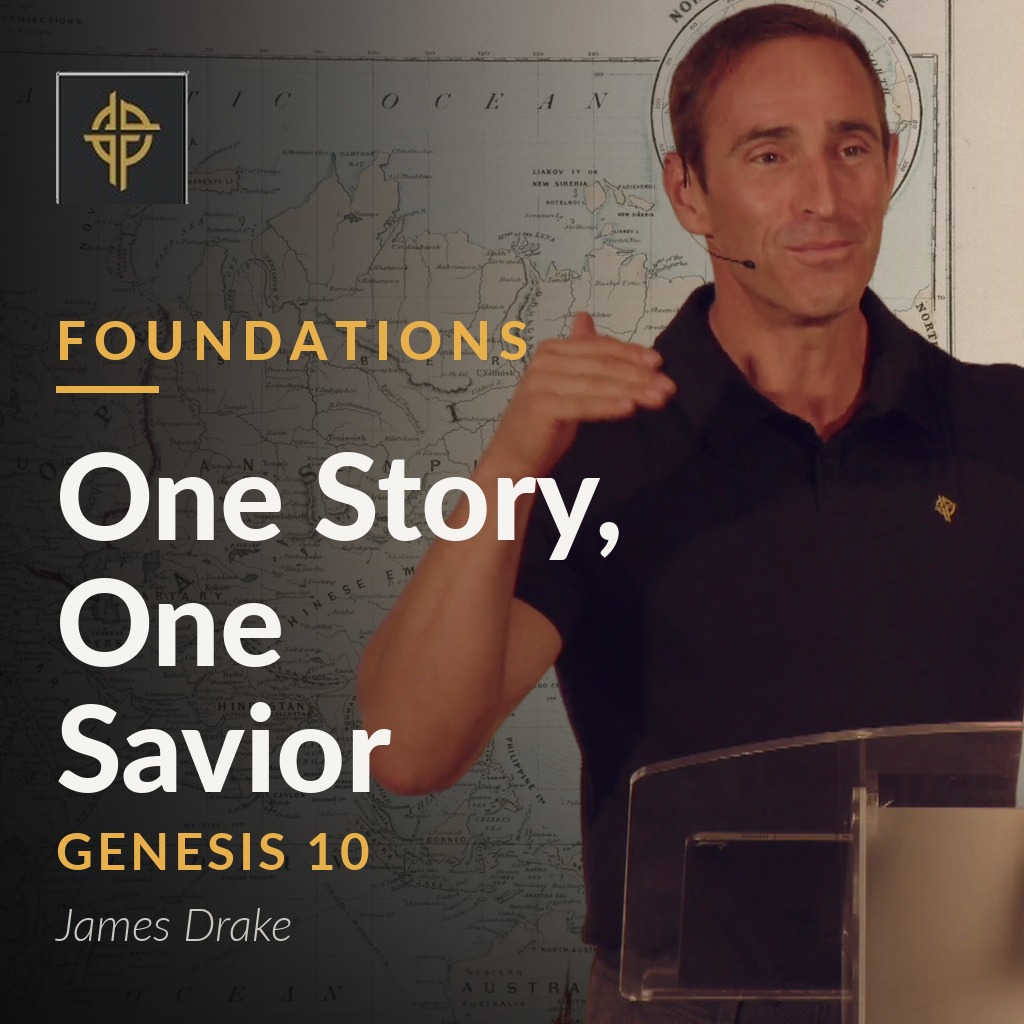
On Sunday James Drake admitted he nearly skipped this chapter — all those unpronounceable names — until he saw the gospel woven right through it. His point was blunt: there is only one race, the human race. Someone once asked if Christchurch is a multiracial church, and James answered no — we have one race, descended from one family, every person bearing the image of God.
This is exactly where the text has been twisted. For centuries people pointed to Noah’s sons and claimed one branch was cursed, using Scripture to defend the indefensible. But the curse in chapter nine fell on Canaan, not on a skin color or a continent. Genesis 10 does the opposite of dividing us by worth: it hands every nation the same father, the same Maker, the same dignity.
So the way you see the person least like you is not a small thing. The coworker whose accent you strain to follow, the neighbor whose holidays you don’t share — Genesis 10 says they came from your family and carry your Father’s image. You cannot worship the Maker on Sunday and despise what He made on Monday. Look again today at someone easy to overlook, and see a relative.
Reflect
Who is the person hardest for you to see as family — and what in you needs to change before you can?

Pray
Father, You made every nation from one family, and You made me in Your image alongside people I am slow to love. Forgive the ways I rank what You have called equal. Teach me to see Your likeness in the face I would rather overlook. Amen.
Who is the person hardest for you to see as family — and what in you needs to change before you can?
"Hebrews 11:7 (ESV)
By faith Noah, being warned by God concerning events as yet unseen, in reverent fear constructed an ark for the saving of his household. By this he condemned the world and became an heir of the righteousness that comes by faith."
Hebrews 11:7 · ESV
Hebrews looks back on Noah and names the one thing that mattered: “By faith Noah… constructed an ark for the saving of his household.” Not by talent, not by a spotless record — by faith. He was warned about a flood no one could yet see, and he believed God enough to start building. The righteousness credited to him came through trust, not through being impressive.
James Drake did not tidy Noah up on Sunday. The same man who built the ark later planted a vineyard, got drunk, and lay exposed in his tent. James, who serves as an Army chaplain, recognized a man wrecked by what he had witnessed — a whole world lost. And then he said what some of us needed to hear: God still used him. Broken people are not disqualified people.
That is the quiet hinge of the whole story. Noah did not get everything right; he got one thing right — he believed God and did what God told him. Scripture never hides his failures, yet Hebrews still lists him among the faithful. The Bible is honest about its heroes precisely so we will stop waiting to be flawless before we trust. God works through people still in progress.
So if you feel like the cracks in you have ruled you out, hear this. The question God asks is not whether your record is clean but whether you will trust Him with the next thing He has told you to do. Your failures are real; they are not the final word. Offer Him the faith you have, broken as it feels, and watch what He builds.
Reflect
What failure have you been treating as the thing that disqualifies you — and what would it look like to trust God with your next step anyway?
Pray
Lord, I know my own cracks better than anyone. Thank You that You counted Noah faithful without pretending he was perfect. Help me stop waiting to be flawless before I obey. Take the trust I can offer today, broken as it is, and use me. Amen.
What failure have you been treating as the thing that disqualifies you — and what would it look like to trust God with your next step anyway?
"Acts 1:8 (ESV)
But you will receive power when the Holy Spirit has come upon you, and you will be my witnesses in Jerusalem and in all Judea and Samaria, and to the end of the earth.”"
Acts 1:8 · ESV
Jesus’ last words before He ascended were not a strategy but a sending: “You will be my witnesses in Jerusalem and in all Judea and Samaria, and to the end of the earth.” Notice the widening circles — home first, then the uncomfortable neighbor, then the whole globe. And notice the power: He does not ask them to go on willpower. The Spirit comes first, then the witness goes out.
On Sunday James Drake connected two scenes most of us keep apart. At Babel, God scattered a proud people by confusing their one language into many. At Pentecost, the Spirit fell and those same divided tongues became the very way the gospel reached every nation at once. What judgment once fractured, grace now gathers. James called Pentecost the reversal of Babel — division turned, in Christ, into invitation.
But James named the catch honestly. The early church heard “go to the ends of the earth” and then mostly stayed home, hoping the world would come to them. It took the scattering of persecution to push them out the door. We are tempted the same way — to build something safe and wait for people to show up. The sending was never a suggestion to admire from a pew.
So today you are a sent person, not settled. Your Jerusalem is the house you live in and the desk you sit at; your Judea and Samaria are the people nearby you would rather avoid. The Spirit who fell at Pentecost is the same Spirit in you, and He did not come to make you comfortable. Ask Him who He is sending you toward this week — and go.
Reflect
Where have you been waiting for people to come to you, when Jesus has actually sent you to them?
Pray
Holy Spirit, You turned scattered languages into good news for every nation, and You live in me now. Forgive me for settling where You have sent me. Show me the one person You are drawing me toward this week, and give me the courage to go and speak. Amen.
Where have you been waiting for people to come to you, when Jesus has actually sent you to them?
"Acts 8:35 (ESV)
Then Philip opened his mouth, and beginning with this Scripture he told him the good news about Jesus."
Acts 8:35 · ESV
“Then Philip opened his mouth, and beginning with this Scripture he told him the good news about Jesus.” One sentence, but watch what it cost. Philip left a revival to walk a desert road and climb into a stranger’s chariot — a foreigner, an outsider by every measure. He did not wait for the man to find his way in. He opened his mouth and started with Jesus.
James Drake lingered on who this man was: an Ethiopian official, a eunuch who could never have children, treated as an outsider by the religious. Yet God sent Philip straight to him. James pointed to the next page of Isaiah — “you who are barren will have many children” — and noted that the revival sweeping Africa today, millions strong, traces back to this one outsider God refused to overlook.
This was the heartbeat of the whole message: making a seat at the table for one more. James told of a packed tent revival in 1934 where an usher chased two teenage boys who were leaving and said, “Come back — we’ll make room for you.” One of those boys was Billy Graham. A single person refusing to let an outsider slip away can bend the course of history.
So here is the question James left us with, and it will not let you stay general: who is your one more? Not the nations in the abstract — a name. The coworker eating alone, the relative everyone has given up on, the new face no one greeted. God is sending ordinary people down desert roads to outsiders He has prepared. This week, make room at your table for one.
Reflect
Who is the one person God keeps bringing to mind — and what is one concrete way you could make room for them this week?
Pray
Father, You sent Philip to one outsider and changed a continent. I confess I often wait for people to come to me. Put a name on my heart today — my one more — and give me the courage to open my mouth, begin with Jesus, and make room. Amen.
Who is the one person God keeps bringing to mind — and what is one concrete way you could make room for them this week?
"Revelation 7:9 (ESV)
After this I looked, and behold, a great multitude that no one could number, from every nation, from all tribes and peoples and languages, standing before the throne and before the Lamb, clothed in white robes, with palm branches in their hands,"
Revelation 7:9 · ESV
John is shown the end of the whole story, and it is not a single tribe standing before God. It is “a great multitude that no one could number, from every nation, from all tribes and peoples and languages, standing before the throne.” Every branch of the family that scattered in Genesis 10 is here, home at last, in white robes with palm branches. The scattering was never the end.
James Drake ended Sunday exactly here. Genesis 10, he said, tells how the nations were divided; Acts 2 tells how they are being unified in the gospel; and Revelation 7 tells where it all lands — every tongue, tribe, and nation before the throne. Then he borrowed the missionary C.T. Studd’s line: “Only one life, ’twill soon be past; only what’s done for Christ will last.”
It would be easy to hear that vision as a guarantee requiring nothing of us. But John’s multitude does not assemble itself. Every nation in that crowd arrived because someone carried the good news to them — a Philip on a desert road, a translator like Cameron Townsend, an usher at a tent door. The throne room is full because, century after century, believers kept making room for one more.
So let the end of the story reach into your week. The person you are tempted to overlook could one day stand in that countless crowd — and God may intend you to be the reason. You will not remember this Sunday by the seventy names you cannot pronounce. You will remember it by the one name you finally spoke to. Go make room at the table.
Reflect
When you picture that countless crowd before the throne, whose face do you hope to see there because you refused to give up on them?
Pray
Lord, thank You that the scattering ends in a throne room full of every nation You love. Keep me from living small and safe. Let my one short life count for the one more You have put in my path, so that someday I see them home. Amen.
When you picture that countless crowd before the throne, whose face do you hope to see there because you refused to give up on them?