


"Genesis 11:4 (ESV)
Then they said, “Come, let us build ourselves a city and a tower with its top in the heavens, and let us make a name for ourselves, lest we be dispersed over the face of the whole earth.”"
Genesis 11:4 · ESV
The builders at Babel were not short on ambition. “Let us make a name for ourselves,” they said, stacking brick on brick toward the heavens. Notice the whole project points one direction — inward, upward, toward their own glory. God is never mentioned. The city rises as a monument to the people who poured its mortar, a name carved by human hands to outlast them.
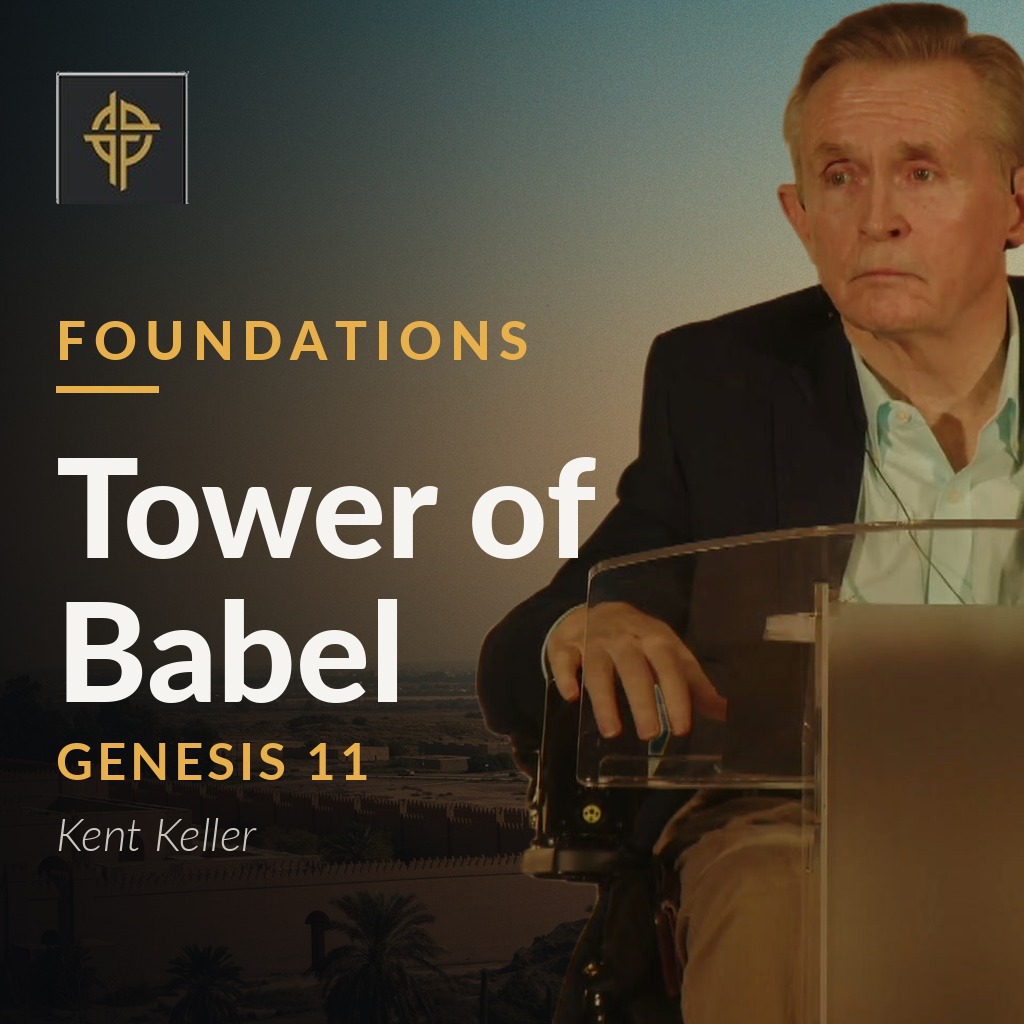
On Sunday Kent Keller opened with Augustine’s two cities. The city of man, Augustine wrote, is built on love of self to the point of contempt for God; the city of God is built on love for God. Babel is the first city of man, Kent said — primitive by our standards, but still a prototype of every skyline raised to the glory of people instead of their Maker.
The word for “name” here is shem. A few chapters earlier God had blessed Noah’s son by that same name, Shem, and promised to carry His purposes through that line. Babel’s builders wanted a shem of their own making — glory on their own terms, apart from the God who gave it. The ache to be remembered is not the sin; wanting to be remembered without Him is.
You build a name too — in the hours you give, the work you polish, the reputation you guard. None of that is wrong. The question Babel presses is simpler: whose glory is the tower for? A life can be impressively tall and still point nowhere but back at itself. Lay today’s bricks for the One who gave you the hands, and your name will rest in His.
Reflect
What is one “name” you are building right now — and whose glory is it really for?
Pray
Father, I spend so much of myself making a name that lasts. Forgive the quiet pride that leaves You out of my building. Let whatever I make today point back to You, and let it be enough to be known as Yours. Amen.
What is one “name” you are building right now — and whose glory is it really for?

"Proverbs 16:18 (ESV)
Pride goes before destruction,
and a haughty spirit before a fall."
Proverbs 16:18 · ESV
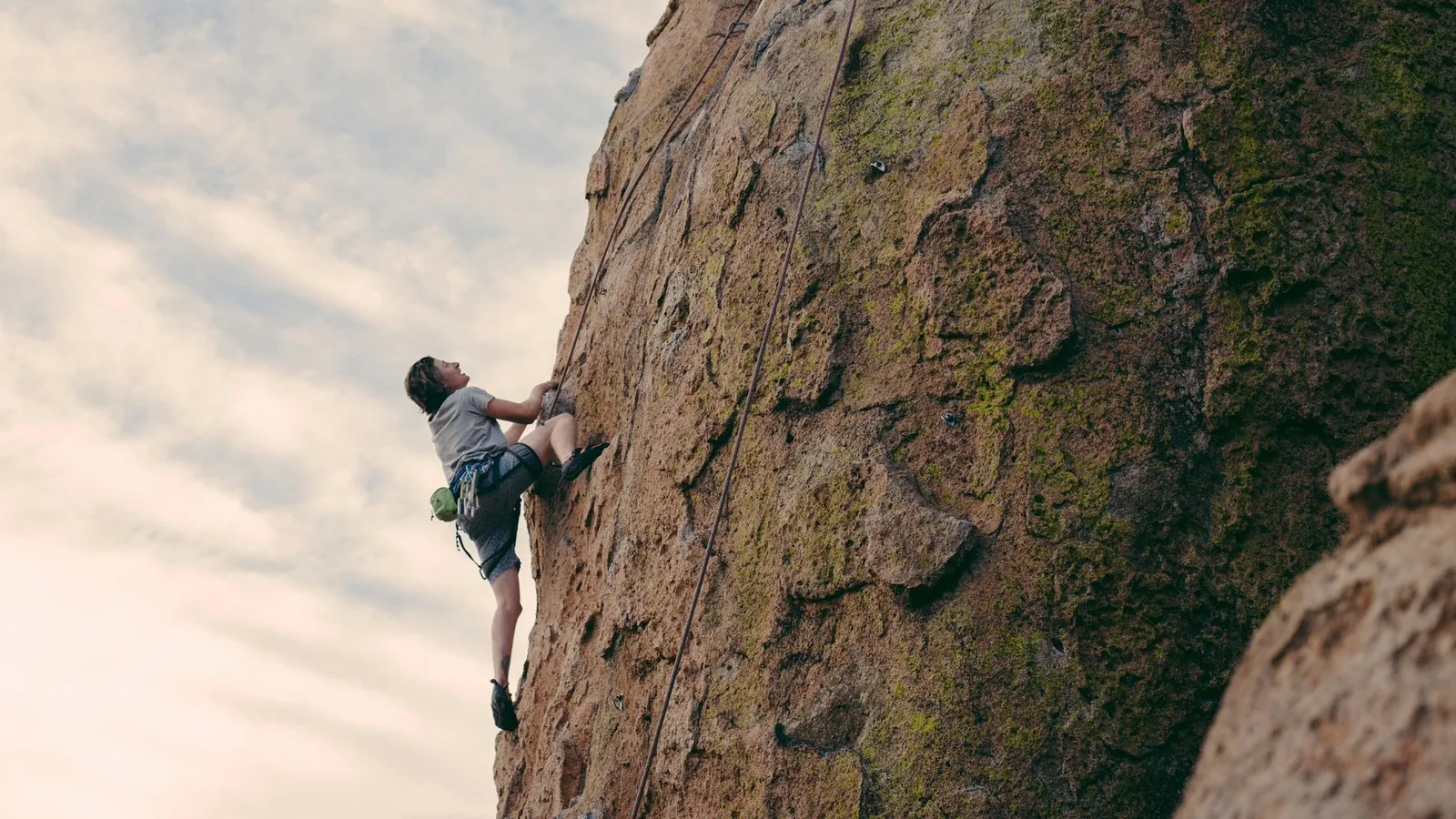
Proverbs does not whisper the warning: “Pride goes before destruction, and a haughty spirit before a fall.” The image is physical — a person drawn up to full height, chin lifted, certain of their own footing, a half-step before the floor gives way. Scripture returns to this again and again because pride is so good at hiding. It rarely feels like arrogance from the inside. It feels like confidence.
Kent drew on C.S. Lewis on Sunday: there are two kinds of pride. One is the opposite of shame — the honest pride you take in family, or in a job done well. That kind is good. The other is the opposite of humility, and it has older names: arrogance, hubris. Babel was founded on the second kind, and so are most of the ruins pride leaves behind.
Hear what this proverb does not say. It is not scolding you for taking satisfaction in good work or being glad of the people you love. The fall it warns of is the slow hardening that stops needing God — the tower builder sure he can out-engineer heaven. Hubris is not loud. It is the quiet assumption that you are the measure of what is good.
So the work is not to feel worse about yourself; it is to stay low enough to keep leaning on God. Where have you been most sure of your own footing lately? That is usually the exact place the floor is least steady. Name it, and hand it back to Him before the fall does it for you. Humility is simply standing where you actually are.
Reflect
Where are you most sure of your own footing right now — and what would it look like to lean on God there instead?
Pray
Lord, I know the good kind of pride and the kind that quietly pushes You aside, and I am not always honest about which is which in me. Keep me low enough to need You. Steady me where I think I stand on my own. Amen.
Where are you most sure of your own footing right now — and what would it look like to lean on God there instead?
"Psalm 46:10 (ESV)
“Be still, and know that I am God.
I will be exalted among the nations,
I will be exalted in the earth!”"
Psalm 46:10 · ESV
“Be still, and know that I am God.” The stillness here is not a spa afternoon; the Hebrew carries the sense of letting your hands drop, ceasing your frantic effort, surrendering the controls. And the knowing that follows is not information. It is the settled recognition of who actually runs things — “I will be exalted among the nations” — and the quiet relief of discovering it was never you.
Kent pictured the city of man as a domed stadium with a retractable roof. Most days we keep it shut, absorbed in the game. Then a crisis comes — the doctor’s call, the thing we cannot fix — and we crank the roof open and cry, “God, I need You now.” Technology, he said, is a wonderful servant and a lousy God. We have let the servant run the house.
Notice Babel’s builders were not lazy or stupid — they were on the cutting edge of their age, brick and bitumen, the ancient world’s Epcot. The problem was never their skill. It was that their skill left no room for God until the roof was forced open. Our phones and feeds are not evil; they simply make it easy to stay busy enough never to be still.
You do not have to wait for the crisis to look up. The invitation is to open the roof now — today, on an ordinary Wednesday — before anything forces your hand. Put the phone down for ten honest minutes. Let your grip loosen. Be still long enough to remember who God is and that you are not Him, and feel how much lighter that makes the day.
Reflect
What “roof” do you keep closed until a crisis forces it open — and what would it take to open it today?
Pray
God, I stay busy enough to avoid being still, and I call You only when my own fixes fail. Teach me to open the roof before the storm. Help me drop my hands today, long enough to know that You are God and I am not. Amen.
What “roof” do you keep closed until a crisis forces it open — and what would it take to open it today?
"Philippians 3:18-19 (ESV)
For many, of whom I have often told you and now tell you even with tears, walk as enemies of the cross of Christ. Their end is destruction, their god is their belly, and they glory in their shame, with minds set on earthly things."
Philippians 3:18-19 · ESV
Paul writes this “even with tears” — not about distant strangers, but about people who glory in their shame, parading what should bring a blush. Their minds, he says, are set on earthly things. It is the portrait of a heart that has made its own appetite into its god, and Paul weeps because he sees where a life aimed only downward finally lands.
Kent felt the sting of this personally on Sunday. A new video game, Grand Theft Auto VI, is set in a glittering version of Miami, the city he has loved. It glories in exactly the shame Paul names, selling the city’s vice as its brand. It grieved him. And it put Babel in the present tense: the city of man still builds its towers to the wrong glory.
But Sunday was not a lecture. Kent turned it on all of us. The Enlightenment handed the city of man its charter — “man is the measure of all things” — and we sign it whenever we treat God’s world as ours. He pictured a priceless car on loan from a father, due back one day. The earth, our bodies, our years — all of it on loan.
Today many of us sit down to give thanks, and that is no small act of resistance. Gratitude says the opposite of Babel: this was given, not earned; I am a steward, not an owner. So before the plates are cleared, name what you have treated as yours and hand it back to the One who loaned it. A thankful heart is already building toward the other city.
Reflect
What has God loaned you that you have started treating as yours to spend — and how would gratitude change the way you hold it?
Pray
Father, everything I called mine today was really on loan from You — this day, this table, this body, this city. Forgive the ways I have gloried in things that should humble me. Make me a grateful steward, and aim my heart toward Your city. Amen.
What has God loaned you that you have started treating as yours to spend — and how would gratitude change the way you hold it?
"Revelation 21:3-4 (ESV)
And I heard a loud voice from the throne saying, “Behold, the dwelling place of God is with man. He will dwell with them, and they will be his people, and God himself will be with them as their God. He will wipe away every tear from their eyes, and death shall be no more, neither shall there be mourning, nor crying, nor pain anymore, for the former things have passed away.”"
Revelation 21:3-4 · ESV
After the whole arc of Babel, John hears a voice from the throne: “Behold, the dwelling place of God is with man.” This is the city Babel’s builders counterfeited and could never reach — not a tower straining up to heaven, but heaven come down. No one quarries a brick for it. It arrives as a gift, prepared as a bride, and its builder is God Himself.
Kent closed Sunday the way Augustine did: what man builds, man destroys, but the city of God is built by God and cannot be destroyed. Then he read this scene — no more death, no more mourning, every tear wiped away by God’s own hand. Babel’s tower is rubble under the sand. This city has no temple, because the Lord and the Lamb are its temple and its light.
Hear what this hope does not do: it does not excuse us from the city we live in now. Kent prayed that God would use His people to make the city of man look more like the city of God — salt and light on this street, this week. A city we did not build is no reason to stop loving the one we do.
So the week ends with a question about your citizenship. Both cities still send their invitations; both towers still beckon. One is built on your name and will not outlast you. The other is built on God’s name and will outlast everything. Where is your highest allegiance — the skyline you can see, or the city coming down from heaven? Live today as a citizen of the one that lasts.
Reflect
If someone traced how you spend your days, which city would they say you are a citizen of — and where is your highest allegiance?
Pray
Lord, I have poured my days into towers with my own name on them. Thank You that the city that lasts is one I could never build — You built it. Make me a citizen of it now, and use me to bring its light here. Amen.
If someone traced how you spend your days, which city would they say you are a citizen of — and where is your highest allegiance?