

Sermon Blog
One Story, One Savior: Genesis 10 and the One Family God Is Gathering
James Drake on Genesis 10's Table of Nations: all 70 peoples trace to one family, and the gospel runs from Babel to Pentecost to the throne.

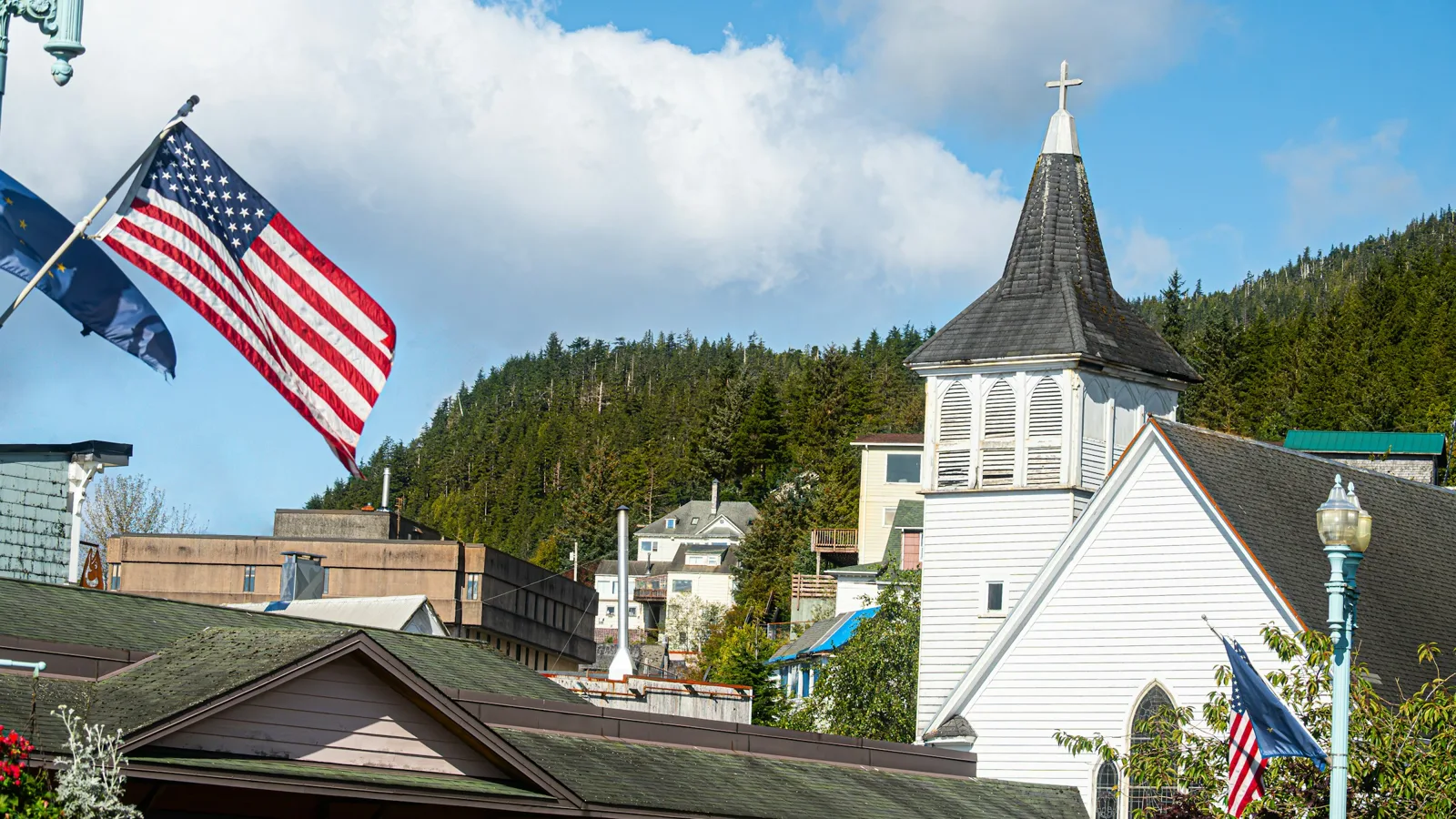
Photo: Owen Cannon / Unsplash (6TLCSMj8zgE)
Let me be honest with you. When I sat down to prepare this week, I almost skipped the chapter. Genesis 10 is seventy names, most of them unpronounceable, strung together like a phone book from the ancient world. Gomer and Magog and Tubal and Meshech. You read it out loud and you feel your eyes glaze over. I thought, surely there is nothing here for a Sunday morning.
And then I saw the gospel woven right through it, and I could not get away from it.
We have been walking through Genesis 1–11 in a series we are calling Foundations, and this week we come to what scholars call the Table of Nations. It is the Bible’s map of humanity — how the whole earth got repopulated after the flood, every people group traced back through Noah’s three sons, Shem, Ham, and Japheth. Seventy nations. One family tree. And God planted the root.
There is only one race
Someone once asked me if Christchurch is a multiracial church. And I said no.
Now, before you write me an email, let me tell you what I mean. We are not a multiracial church because, according to the Bible, there is only one race. The human race. We all came from one family, stepping off one ark, onto one cleansed earth. Read the last verse of the chapter slowly: “These are the clans of the sons of Noah, according to their genealogies, in their nations, and from these the nations spread abroad on the earth after the flood” (Genesis 10:32).
Every person you have ever met is on that map. The coworker whose accent you strain to follow. The neighbor whose holidays you do not share. The stranger on the other side of the political line. Genesis 10 says they came from your family, and they carry your Father’s image.
You see, this is exactly where the text has been twisted. For centuries people pointed to Noah’s sons and claimed one branch was cursed, using Scripture to defend the indefensible. But the curse in the chapter before fell on Canaan, not on a skin color and not on a continent. Genesis 10 does the opposite of ranking us. It hands every nation the same Maker, the same dignity, the same worth. You cannot worship the God who made every face on Sunday and despise one of those faces on Monday.
The names that scatter
Watch how the chapter keeps repeating one little phrase. “From these the coastland peoples spread in their lands, each with his own language, by their clans, in their nations” (Genesis 10:5). It says it again over Ham’s line, and again over Shem’s. Languages. Lands. Clans. Nations. The family is spreading out, and it is splitting apart.
And if you turn the page you find out why. In Genesis 11, at a place called Babel, a proud people tried to build a tower up to heaven and make a name for themselves, and God came down and confused their one language into many, and scattered them across the face of the earth. That is the backstory sitting underneath this whole list of strange names. The nations of Genesis 10 are a scattered people. Divided. Speaking past each other. Unable to understand the person across the table.
Hold onto that, because the Bible does not leave it there.
The reversal nobody saw coming
Now, here’s the twist.
Fast forward to the book of Acts. A small group of ordinary believers is gathered in Jerusalem, and the Holy Spirit falls on them like fire. “And they were all filled with the Holy Spirit and began to speak in other tongues” (Acts 2:4). Those same divided languages — the ones God had scattered at Babel — suddenly become the very way the gospel reaches every nation at once. Visitors from all over the known world hear the good news, each in his own tongue.
Do you see what God is doing? What judgment fractured at Babel, grace gathers at Pentecost. Babel was the scattering. Pentecost is the regathering. The confusion of tongues becomes the proclamation of Christ in every tongue. And it all runs on the same power Jesus promised before He left: “You will receive power when the Holy Spirit has come upon you, and you will be my witnesses in Jerusalem and in all Judea and Samaria, and to the end of the earth” (Acts 1:8).
Here is where it gets personal. The early church heard “to the end of the earth” and then mostly stayed home, hoping the world would come to them. It took the scattering of persecution to finally push them out the door. And I think many of us are tempted the exact same way — to build something safe and comfortable and wait for people to show up. But the Spirit did not come to make us comfortable. He came to make us witnesses.
A seat for one more
Watch one man obey it. God pulls Philip out of a revival and sends him down a desert road to a single stranger — an Ethiopian official, a eunuch, an outsider by every measure the religious world kept. And “Philip opened his mouth, and beginning with this Scripture he told him the good news about Jesus” (Acts 8:35). One foreigner no one else was reaching. And the revival sweeping that continent today, millions strong, traces back to the one outsider God refused to overlook.
That is the heartbeat of this whole thing. Making a seat at the table for one more.
In 1934 there was a packed tent revival, and two teenage boys were slipping out the back. An usher chased them down and said, “Come back — we’ll make room for you.” One of those boys was Billy Graham. A single person, refusing to let an outsider leave unseen, bent the course of history.
And here’s where the story is headed. The missionary C.T. Studd said it in a line I cannot shake: “Only one life, ‘twill soon be past; only what’s done for Christ will last.” Because John was shown the end of all of it, and it is not one tribe standing before God. It is “a great multitude that no one could number, from every nation, from all tribes and peoples and languages, standing before the throne” (Revelation 7:9). Every branch of the family that scattered in Genesis 10 is there — home at last. The scattering was never the end.
Your one more
So here is what I want all of us to remember. Genesis 10 tells how the nations were divided. Acts 2 tells how they are being unified in the gospel. Revelation 7 tells where it all lands — every tongue, tribe, and nation before the throne. One story. One Savior.
And it will not let you stay general. We live in Miami, where God has done something remarkable. The whole world has come to us. Your mission field shops at your grocery store and sits in the next cubicle. So who is your one more? Not the nations in the abstract — a name. The person eating alone. The new face no one greeted. The relative everyone has quietly given up on.
You will not remember this Sunday by the seventy names you cannot pronounce. You will remember it by the one name you finally spoke to. We are a faith family on mission. Go make room at the table for one more.
Father, thank You that You made every nation from one family, and that not one of them is beyond Your reach. Forgive us for the ways we rank what You have called equal, and for building something safe while the world You love waits at the door. Fill us again with Your Spirit, and send us — down whatever desert road, to whatever outsider You have already prepared. Help us make room at the table for one more, until the countless crowd stands before Your throne. In Jesus’ name, amen.
Come worship with us this Sunday at Christchurch. Next week in Foundations we come to Genesis 11 and the city that reached for heaven.
Frequently asked questions
What is the Table of Nations in Genesis 10?
Does the Bible teach one human race?
How is Pentecost the reversal of Babel?
What does "making room for one more" mean?
Pastoral writing from the team at Christchurch Miami — a faith family on mission in Kendall, Miami.