



What About? (Week 8)
Is the Bible Really Reliable? · Resources
2 Peter 1:16-18
Summary
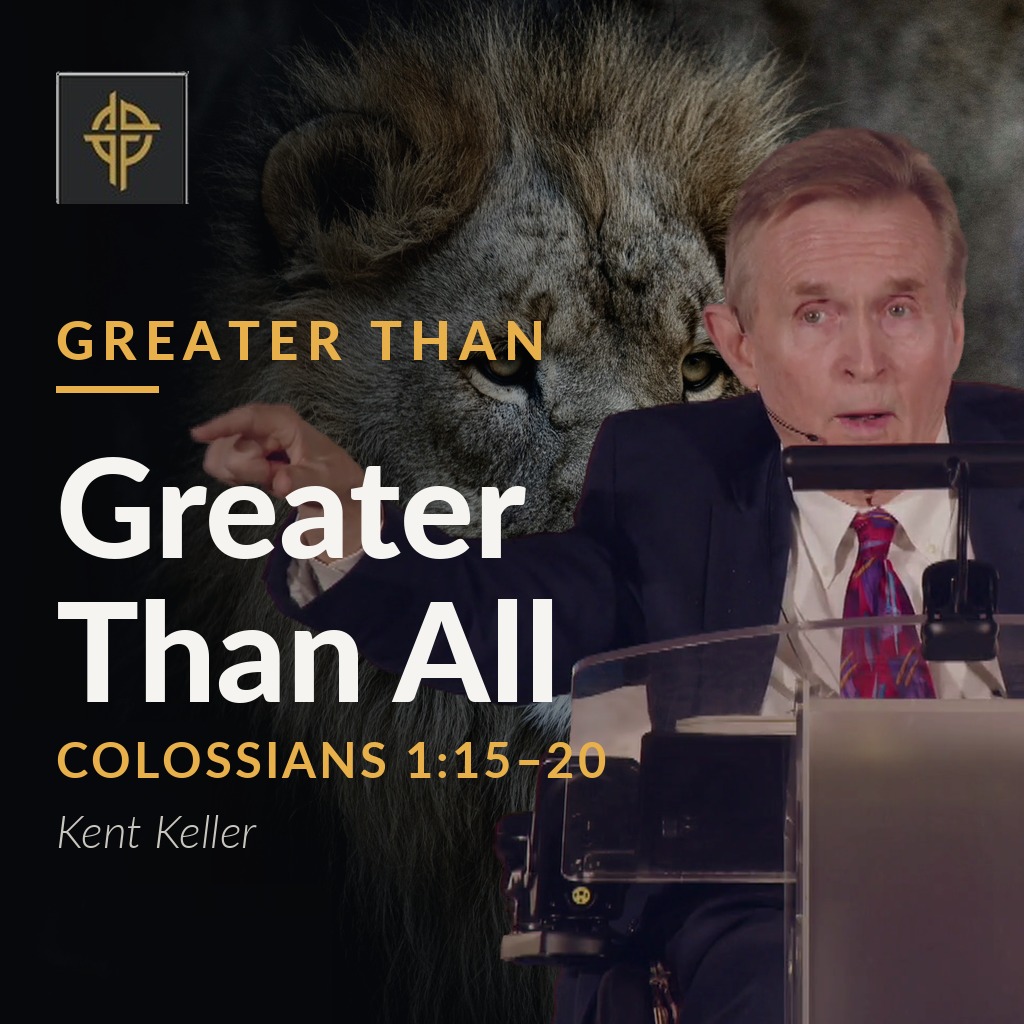
Can we actually trust this book? Kent Keller takes the question the way a historian would — who wrote it, whether they were eyewitnesses, how the manuscripts compare to Homer and Plato, what the Dead Sea Scrolls settled. Then he makes the simpler point: none of it does you any good if the book stays shut.
Sermon Outline
- 1
"That Book's Alive" ▶ 0:00
A doctoral advisor lays the great philosophers out on a table, sets a Bible off to the side, and asks Haddon Robinson what the difference is.
- 2
Reading: Matthew 4:1-4 ▶ 1:42
Jesus, forty days hungry in the wilderness, answers the tempter with a sentence from Deuteronomy.
- 3
The Question Before the House ▶ 3:31
This is the But What About series, and the congregation submitted the questions. Kent warns that there will be a lot of content and a lot of screens.
- 4
In the Wilderness, and in the Garden ▶ 4:35
Kent imagines the tempter's pitch to a starving man — and sets it beside a garden where the first man heard a similar offer and took it.
- 5
A Biblically Illiterate Culture ▶ 8:10
The State of the Bible survey from January: 68% of Americans read the Bible less than once a year, 42% never. We have more than enough bread and are starving anyway.
- 6
No Microwave Spirituality ▶ 10:22
Jesus chose sacrifice over shortcut, and there are no shortcuts on offer to us either. Reading God's word is the first of the spiritual disciplines and there is no substitute for it.
- 7
Hasn't Science Disproved It? ▶ 11:31
Science answers what and how, sometimes where and when. Who and why sit outside what it can reach, which is why it can neither prove nor disprove God.
- 8
Who Wrote It? 66 Books, About 40 Writers ▶ 13:14
Narrative, poetry, prophecy, letters and a genre that had never existed before — written in three languages, mostly by suffering people to suffering people, and all of it pointing at Christ.
- 9
Were They Eyewitnesses? ▶ 17:07
Matthew and John walked with him. Mark may have been the young man who ran from Gethsemane. Luke wrote as a careful historian, Peter as a man who heard the voice on the mountain, and John as one who says: I was there, don't tell me he was a phantom.
- 10
Compared to Homer, Caesar and Plato ▶ 25:29
5,800 Greek manuscripts within decades of the events, against seven copies of Plato with a 1,300-year gap. Nobody questions Plato.
- 11
The Dead Sea Scrolls ▶ 28:03
A cave near Qumran in 1946 produced Old Testament manuscripts that agreed with the text we already had — and no archaeological discovery has yet disproved anything in the Bible.
- 12
There Is No Substitute ▶ 30:25
Cassette tapes, a decision in college, and forty years of rarely missing a day. Then Olga, who carried a Bible home from a pew rack, thought "this book is going to change my life" before she opened it, and was right.
Key Points
- The Bible is 66 books written by about 40 people in three languages under mostly difficult circumstances — and every part of it points to Christ. He is the key to reading it.
- The Bible itself has never saved anybody. The written word points to the living Word, and he is the one who saves.
- Science answers what and how, sometimes where and when. It cannot answer who and why, and it can neither prove nor disprove God.
- The New Testament rests on eyewitnesses and was written within a generation, while people who badly wanted to disprove it were still alive. History records no one ever stepping forward to do so.
- As a document, the New Testament is far better attested than Homer, Caesar or Plato. People question the Bible not because the evidence is thin but because it makes demands on them.
- The Dead Sea Scrolls matched the Old Testament we already had, and no archaeological discovery has ever disproved anything in scripture.
- Reading God's word is the single most important spiritual discipline. There are no shortcuts and no substitutes.
Quotable Moments
“We are in the midst of the most biblically illiterate culture that this nation has ever known.” ▶ 9:11
“Ladies and gentlemen, there is no microwave spirituality. There is no instant discipleship.” ▶ 10:27
“The Bible, the written word, points to the living word, Jesus. He is the one who came to seek and to save those who were lost. So yes, read the Bible, but it does not save you.” ▶ 15:03
“People question the Bible because it makes claims on them because that book's alive and it makes demands on us and on our lives.” ▶ 26:36
“I can make the case for you that the Bible is the Word of God and that it is exactly what it is and it does what it says it does. And if you don't read it, it does you absolutely no good.” ▶ 29:17
Scripture
2 PETER 1:16-18 (ESV)
For we did not follow cleverly devised myths when we made known to you the power and coming of our Lord Jesus Christ, but we were eyewitnesses of his majesty. For when he received honor and glory from God the Father, and the voice was borne to him by the Majestic Glory, 'This is my beloved Son, with whom I am well pleased,' we ourselves heard this very voice borne from heaven, for we were with him on the holy mountain.
1 JOHN 1:1-3 (ESV)
That which was from the beginning, which we have heard, which we have seen with our eyes, which we looked upon and have touched with our hands, concerning the word of life — the life was made manifest, and we have seen it, and testify to it and proclaim to you the eternal life, which was with the Father and was made manifest to us — that which we have seen and heard we proclaim also to you, so that you too may have fellowship with us; and indeed our fellowship is with the Father and with his Son Jesus Christ.
HEBREWS 4:12 (ESV)
For the word of God is living and active, sharper than any two-edged sword, piercing to the division of soul and of spirit, of joints and of marrow, and discerning the thoughts and intentions of the heart.
Take It With You
- Read it. The best case for the Bible's reliability does you no good while the book stays shut.
- Make it non-negotiable — a chapter a day, on paper or on audio, however you can get it.
- Stop waiting for growth to happen to you. There is no instant discipleship.
- If you're a skeptic, read it anyway, and watch what happens.
Related Resources
The study guide above (summary, outline, key points, quotes, questions) was generated from the sermon transcript with AI and reviewed by our team. Spot something off? Let us know.

Subscribe to the podcast
Every Sunday sermon, in whatever app you already use.
Scripture quotations are from the ESV® Bible (The Holy Bible, English Standard Version®), © 2001 by Crossway, a publishing ministry of Good News Publishers. Used by permission. All rights reserved.