



Poor in Spirit = Blessed? · Resources
Matthew 5:1-12
Summary
Opening a new series on the Sermon on the Mount, Pastor James walks through the Beatitudes and shows how Jesus turns the world's idea of happiness upside down. Each surprising blessing — poor in spirit, mourning, meek, hungry, persecuted — points us away from achieving our own happiness and toward receiving it from Christ. The blessed life is not something we earn but a gift Jesus gives, because He first lived every Beatitude in our place.
Sermon Outline
- 1
A new series: Jesus is our message ▶ 1:42
James introduces the church's greatest value and turns the congregation's attention to the Sermon on the Mount, the teaching many call the greatest sermon ever preached.
- 2
A better message after 400 years of silence ▶ 6:30
After centuries of God's silence, Jesus breaks through not with a curse but with a blessing, offering a better hope for a broken world.
- 3
Blessed means a deep, abiding happiness ▶ 8:38
The word 'blessed' carries the idea of a profound, purposeful joy and wholeness — Jesus speaks to the universal human longing for happiness and meaning.
- 4
You can only receive blessing, not achieve it ▶ 11:50
Before unpacking the text, James reveals the destination: happiness and blessedness cannot be earned; they are received from Christ.
- 5
Walking through the Beatitudes ▶ 15:30
Jesus pronounces blessing on the poor in spirit, those who mourn, the meek, the hungry, the merciful, the pure in heart, the peacemakers, and the persecuted — each one a surprise that humbles and points to a Savior.
- 6
Christ lived every Beatitude for us ▶ 27:53
Jesus is the truly blessed One who was poor, who mourned, who was meek and merciful, so that we could be rich, saved, and satisfied in Him.
- 7
Trust Him to work in and through you ▶ 29:07
The closing call: focus on character over circumstances, trust God with our pain, and for seekers, find the rest our restless hearts long for in Christ alone.
Key Points
- Jesus begins His first recorded sermon not with judgment but with blessing, signaling a better message for a broken world.
- To be 'blessed' is to know a deep, abiding joy and wholeness, not a shallow or circumstantial happiness.
- The Beatitudes describe character God produces in us, not achievements we accomplish to impress Him.
- Being poor in spirit means admitting we cannot save ourselves and need Christ to do for us what we cannot do.
- Meekness is controlled strength under God's direction, not weakness.
- We do not earn the blessed life; we receive it from Christ, who lived every Beatitude in our place.
Quotable Moments
“You can't achieve happiness. You can't achieve being blessed. You can only receive it from Christ.” ▶ 11:50
“Ultimately, we have to come before God recognizing that we are broken in need of a Savior, and we cannot save ourselves.” ▶ 17:17
“He's not calling us to be weak. Just the opposite. He wants us to be strong but controlled.” ▶ 21:11
“Augustine who said, our hearts are restless until they find rest in thee. And so our greatest hunger, our greatest joy, our greatest satisfaction will only be found in Christ.” ▶ 30:02
Discussion Questions
- 1
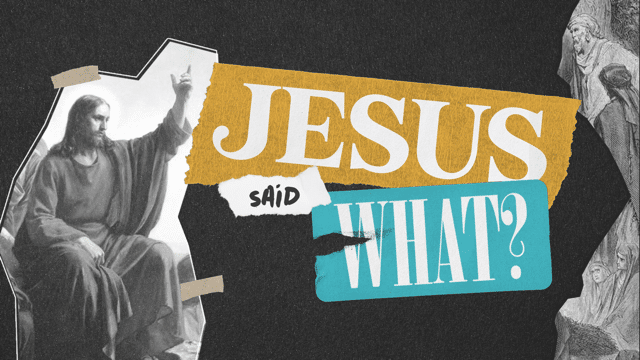
Read Matthew 5:1-12 together. Which of the Beatitudes most makes you say 'Jesus said what?' and why?
- 2
James said being 'poor in spirit' means recognizing we can't save ourselves. Where do you tend to rely on your own effort instead of on Christ?
- 3
How is the deep, abiding 'blessedness' Jesus describes different from the happiness our culture chases?
- 4
The sermon contrasted achieving versus receiving. What would change if you truly believed the blessed life is a gift to receive, not a goal to earn?
- 5
James pointed out that Christ Himself lived every Beatitude for us. How does that change the way you read this passage and approach your own struggles this week?
Take It With You
- This week, when life feels hard, pray 'God, don't just do a work around me — do a work in and through me,' focusing on character over circumstances.
- Name one area where you are trying to earn God's favor, and instead receive His blessing by resting in what Christ has already done.
- Practice meekness as controlled strength: in your next conflict, stay strong but under control rather than reacting in anger.
The study guide above (summary, outline, key points, quotes, questions) was generated from the sermon transcript with AI and reviewed by our team. Spot something off? Let us know.


Subscribe to the podcast
Every Sunday sermon, in whatever app you already use.
Scripture quotations are from the ESV® Bible (The Holy Bible, English Standard Version®), © 2001 by Crossway, a publishing ministry of Good News Publishers. Used by permission. All rights reserved.