


Foundations (Week 8)
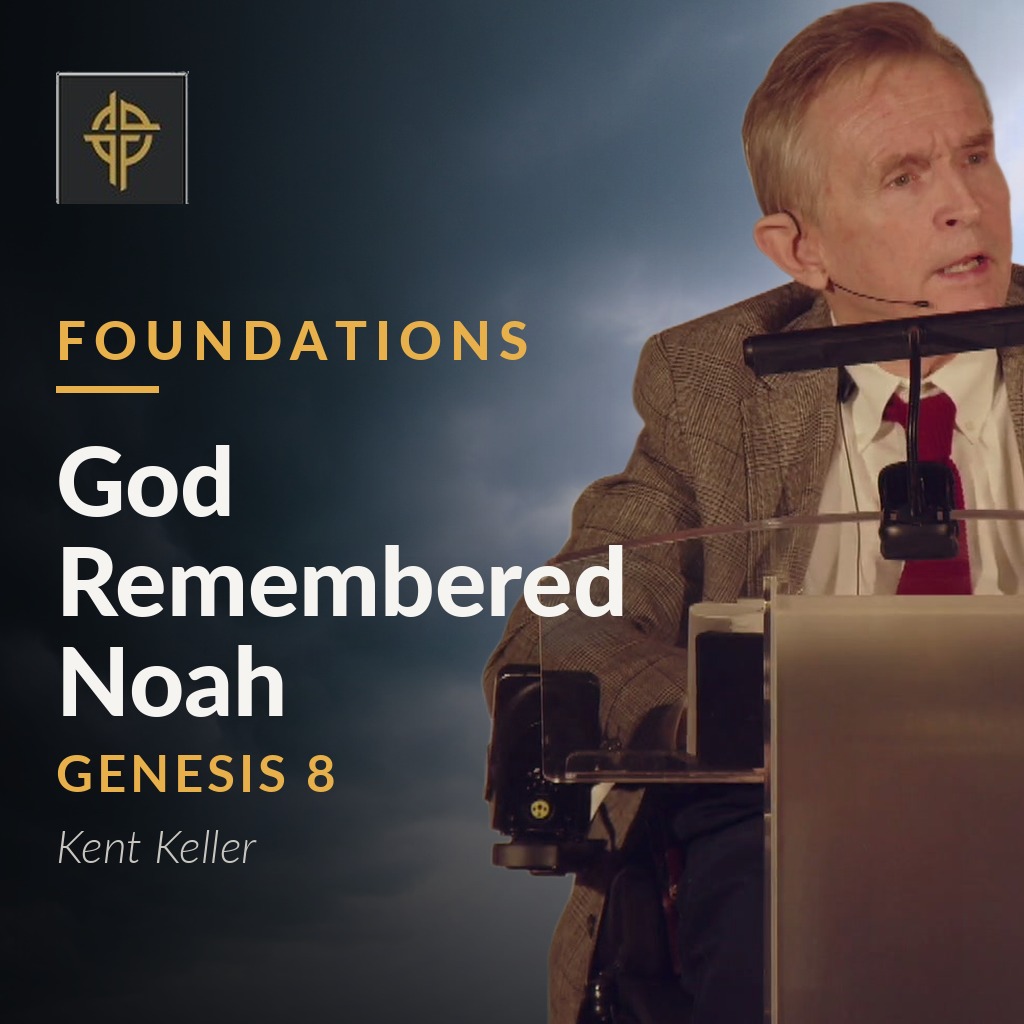
God Remembered Noah · Resources
Genesis 8
Watch & Listen
Summary
Kent Keller opens Genesis 8 with a Jewish friend's question — do you really believe all that? — and answers it by walking through the end of the flood. Noah and his family had been adrift for the better part of a year when three words turn the whole story: 'But God remembered Noah.' Kent traces God remembering His servant, repeating His creation mandate to be fruitful and multiply, and receiving Noah's first act off the ark — not relief but worship at the first altar in Scripture. On Reformation Sunday the sermon lands on one truth: it was never the ark that saved Noah, it was the grace of God, and it is Christ's blood that covers us now.
Sermon Outline
- 1
Do you really believe all that? ▶ 0:00
Kent opens with a lunch conversation with his Jewish attorney friend, who asks whether he really believes a man named Noah built a boat and was carried through a flood. If God spoke the cosmos into existence, is the ark such a stretch?
- 2
God remembered Noah ▶ 8:11
After a year adrift with no marker to show the waters receding, verse one turns the story: 'But God remembered Noah.' When the Old Testament says God remembers someone, it means He is moving to show grace — used seventy-three times, always to save.
- 3
God repeats His mandate ▶ 16:57
God sends the wind — ruach, the same word as Spirit — to dry the earth. The dove returns with an olive leaf, then not at all. God speaks the Genesis 1 words again: be fruitful and multiply. His plan was only delayed, not thwarted.
- 4
God renews His creation ▶ 21:11
God will accomplish His purposes with us or without us; while you have breath you have a say in whether He works through you or around you.
- 5
Noah built an altar ▶ 22:08
Off the ark, Noah's first impulse is not celebration but worship. He builds the first altar in Scripture and offers burnt offerings. Even here, drawing near to God requires sacrifice — something has to die.
- 6
It wasn't the ark, it was the grace of God ▶ 25:16
The boat carried Noah through, but it never saved him — the grace of God did. On Reformation Sunday: not works, not sacrifice, but grace through faith in Christ, whose blood covers us. Come to the table and give thanks.
Key Points
- Genesis 8 is simple: God rescues Noah, and Noah worships God.
- 'But God remembered Noah' means God moved to show grace — the Old Testament uses the word seventy-three times, always to save.
- The wind that dries the earth is ruach, the same Spirit that hovered over the deep in Genesis 1, parted the sea, and filled the house at Pentecost.
- God repeats the creation mandate — be fruitful and multiply — because His purposes were only delayed by the flood, never thwarted.
- Noah's first act on dry land is to build the first altar in Scripture; worship requires sacrifice, something has to die.
- It was never the ark that saved Noah but the grace of God — and it is Christ's blood that covers us now.
Quotable Moments
“To be remembered by God Almighty is beyond rewarding.” ▶ 15:37
“His plan for creation had not been thwarted by the flood, by the fall of mankind into sin. It had only been delayed.” ▶ 20:33
“God will accomplish His purposes with us or without us.” ▶ 20:41
“It wasn't really the ark that covered them and saved them. It was the grace of God.” ▶ 25:16
Scripture
Genesis 8 (ESV)
Genesis 8 (ESV) But God remembered Noah and all the beasts and all the livestock that were with him in the ark. And God made a wind blow over the earth, and the waters subsided. The fountains of the deep and the windows of the heavens were closed, the rain from the heavens was restrained, and the waters receded from the earth continually. At the end of 150 days the waters had abated, and in the seventh month, on the seventeenth day of the month, the ark came to rest on the mountains of Ararat. And the waters continued to abate until the tenth month; in the tenth month, on the first day of the month, the tops of the mountains were seen. At the end of forty days Noah opened the window of the ark that he had made and sent forth a raven. It went to and fro until the waters were dried up from the earth. Then he sent forth a dove from him, to see if the waters had subsided from the face of the ground. But the dove found no place to set her foot, and she returned to him to the ark, for the waters were still on the face of the whole earth. So he put out his hand and took her and brought her into the ark with him. He waited another seven days, and again he sent forth the dove out of the ark. And the dove came back to him in the evening, and behold, in her mouth was a freshly plucked olive leaf. So Noah knew that the waters had subsided from the earth. Then he waited another seven days and sent forth the dove, and she did not return to him anymore. In the six hundred and first year, in the first month, the first day of the month, the waters were dried from off the earth. And Noah removed the covering of the ark and looked, and behold, the face of the ground was dry. In the second month, on the twenty-seventh day of the month, the earth had dried out. Then God said to Noah, “Go out from the ark, you and your wife, and your sons and your sons’ wives with you. Bring out with you every living thing that is with you of all flesh—birds and animals and every creeping thing that creeps on the earth—that they may swarm on the earth, and be fruitful and multiply on the earth.” So Noah went out, and his sons and his wife and his sons’ wives with him. Every beast, every creeping thing, and every bird, everything that moves on the earth, went out by families from the ark. Then Noah built an altar to the LORD and took some of every clean animal and some of every clean bird and offered burnt offerings on the altar. And when the LORD smelled the pleasing aroma, the LORD said in his heart, “I will never again curse the ground because of man, for the intention of man’s heart is evil from his youth. Neither will I ever again strike down every living creature as I have done. While the earth remains, seedtime and harvest, cold and heat, summer and winter, day and night, shall not cease.”
Discussion Questions
- 1
Where in your life do you need to trust that God has already 'remembered' you in mercy, even though nothing has visibly changed yet?
- 2
Kent said these birds were 'on a mission.' What does it mean for you that we are 'a faith family on a mission'?
- 3
God said His purposes move forward with us or without us. Where is He asking you to 'get on board' rather than be left behind?
- 4
Noah's first impulse off the ark was worship, not relief. When God delivers you, what is your first impulse — and what would it look like to make it worship?
- 5
Are you still trusting the 'ark' of your own effort to save you, or resting in the grace of God in Christ that already has?
Take It With You
- Being remembered by God is not the same as feeling relief — His mercy is already at work beneath a sky that still looks like judgment.
- Look for your 'olive leaf' — one small, living sign that the waters are receding — instead of demanding the whole coastline before you believe.
- You were not rescued to sit safely in the boat; the same grace that carried you through now sends you out to carry life into ruin.
- Let your first move after deliverance be worship, offered at the cost the rescue deserves.
- Stop inspecting whether your ark is well-built enough to save you — it never was. Rest in the grace of God, made certain in Christ.
The study guide above (summary, outline, key points, quotes, questions) was generated from the sermon transcript with AI and reviewed by our team. Spot something off? Let us know.
Subscribe to the podcast
Every Sunday sermon, in whatever app you already use.
Scripture quotations are from the ESV® Bible (The Holy Bible, English Standard Version®), © 2001 by Crossway, a publishing ministry of Good News Publishers. Used by permission. All rights reserved.