


"Not everyone who says to me, 'Lord, Lord,' will enter the kingdom of heaven."
Notice who Jesus is talking to. Not atheists. Not agnostics. Not pagans or heretics. He is talking to people who are devotedly religious — people who look like the person sitting next to you. That is what makes this passage so unsettling. Looks can be deceiving.
Think about Judas Iscariot. Right up until the night he led an armed cohort into the garden, the other disciples thought he was one of them. He was one of them. Or so they thought.
Elder Rick Closius pulled a book off his shelf while preparing this message, a treatise written in 1661 by a Puritan pastor named Matthew Mead: The Almost Christian Discovered. Its argument is simple and hard. Many people appear righteous and are righteous only in appearance. If you are almost a Christian, you are not one at all.
A confession that fails
Look closely at what these people say on that day. Did we not prophesy in your name? Did we not cast out demons in your name? Did we not do many mighty works in your name?
Three times, "in your name." But notice what comes first every single time. We.
Their whole appeal rests on what they did. Not one of them says, Lord, have mercy on me because of your blood. They don't plead his righteousness. They present their résumé.
And the answer is devastating: "I never knew you."
Of course Jesus knows who they are. What he means is that they never stood with him in a saving relationship. They used his name. They did not belong to him. The good shepherd knows his sheep, and no one takes them out of his hand.
He calls them workers of lawlessness — a phrase that describes a settled pattern, saying one thing and consistently doing another. Think of how many outwardly godly preachers have collapsed into scandal in recent years. A profession of Christ and a practice of lawlessness cannot live in the same life.
Where there is real union with Christ, there will be repentance, confession, and a hunger for what is right. Not perfection in this life. But a direction.
There's an engraving inside a twelfth-century cathedral in Lübeck, Germany, that says what this passage says:
You call me master and obey me not. You call me light and see me not. You call me the way and walk me not. You call me life and live me not. If I condemn thee, blame me not.
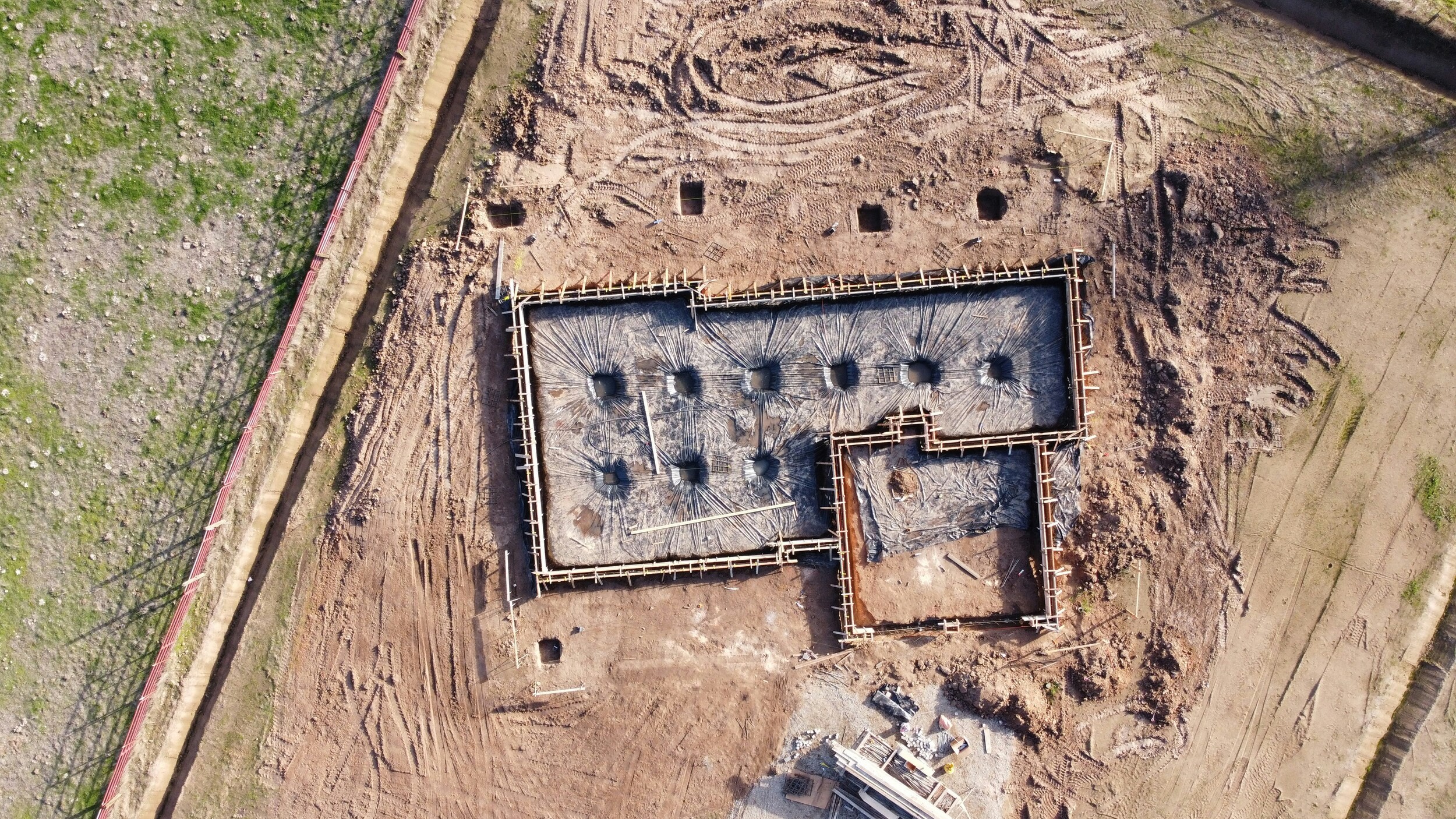
A foundation that stands
What's the worst storm you've ever been through? For Rick it was August 24, 1992 — Hurricane Andrew, Category 5, direct hit, and he was here for all of it. For you it might be a diagnosis, or the sudden death of someone you loved. Those are real storms. None of them is the storm in this passage. Jesus is talking about God's final judgment against sin, and telling us how to be ready for it.
Notice how similar the two builders are. Both hear these words. Both sit under the same preaching. Both know the same truth. The difference is not access to revelation. It's response to revelation.
From the outside the two houses could look identical. Same town. Same climate. Possibly the same church. The same hymns, the same creed, the same doctrinal standards. Neither man intends disaster — the foolish one is confident too. His confidence just happens to rest in himself.
The difference stays invisible until a storm comes. And it is the same storm that hits both houses.
The rock is not a pebble or a loose stone. It's bedrock — and here it is Christ's own revealed word. To build on it is to hear Christ and act on him. Not obedience as the ground of your acceptance, but obedience as the fruit of trusting him. The wise builder doesn't trust his own obedience. He knows he's a sinner. He trusts Christ.
The foolish man hears the same words. He may even defend them in an argument. He just doesn't build on them. He assumes familiarity with truth is the same thing as submission to truth, that acknowledgement is the same as allegiance.
Sand is everything else. Human opinion. Tradition cut loose from Scripture. Self-will, self-sufficiency, self-righteousness. Whatever works. How many people are quietly banking on God grading on a curve, on the theory that they're better than average? That is what standing on sand sounds like.
Sand is easy. It requires no digging — no self-examination, no repentance that cuts, no wrestling in prayer. You find a convenient spot and start putting up walls. Quick, efficient, and impressive from a distance.
But Luke tells us the wise man dug deep. He digs through pride, through self- deception, through the sin he'd rather keep, until he hits bedrock. Because he has read the word, and he knows a storm is coming.
That storm will not care about church membership or be impressed by a ministry title. It tests foundations. The house on the rock may be shaken, but it does not fall — and the reason isn't the skill of the builder. It's the solidity of what's underneath.
The King has spoken
At Christchurch you've often heard that you can belong here before you believe. That's true, and it's a beautiful thing. You've also heard that this is a place to take your next step with Jesus.
But your next step depends on where you're standing.
If you are in Christ, your next step is clear. Build. Grow in obedience. Wage war on the sin still living in you — as John Owen put it, kill sin, or it will be killing you. Dig deeper. Refuse surface religion.
And if you have heard a great deal, maybe even admired a great deal, but have never actually believed — then your next step isn't refinement. It's repentance. Your works cannot save you. Your reputation cannot save you. Your sincerity cannot save you. Only an infinite mercy can pardon sin against an infinite God, and that mercy is in Jesus Christ.
It is possible to admire Jesus and never submit to him. Possible to be moved and never converted. We want relief from the pain without the surgery that heals. But Christ will not numb your guilt and leave the disease untreated.
The King has spoken. Enter at the narrow gate — and when the storm comes, you will stand.