

Sermon Blog
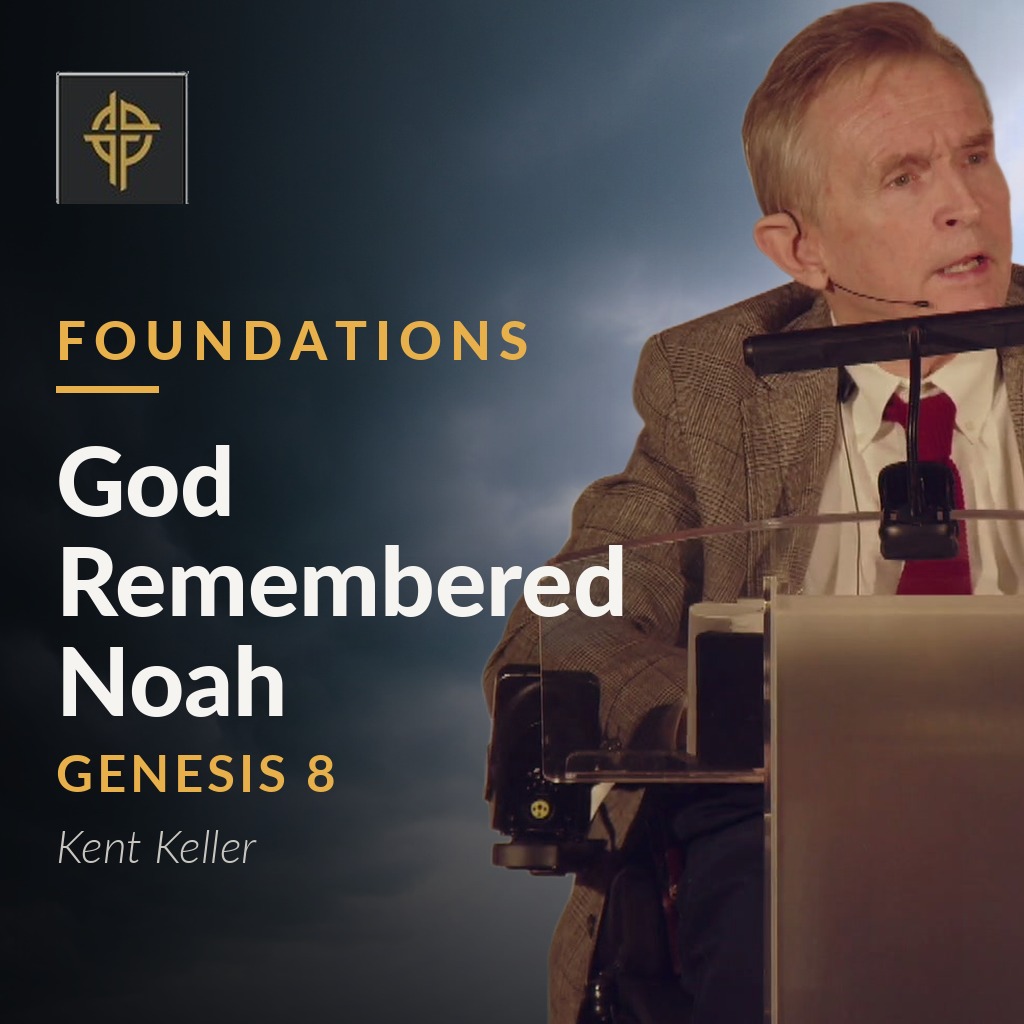
But God Remembered Noah: The Grace at the End of the Flood
A Jewish friend asked me if I really believe the story of Noah. Genesis 8 answers with four words that change everything: But God remembered Noah.

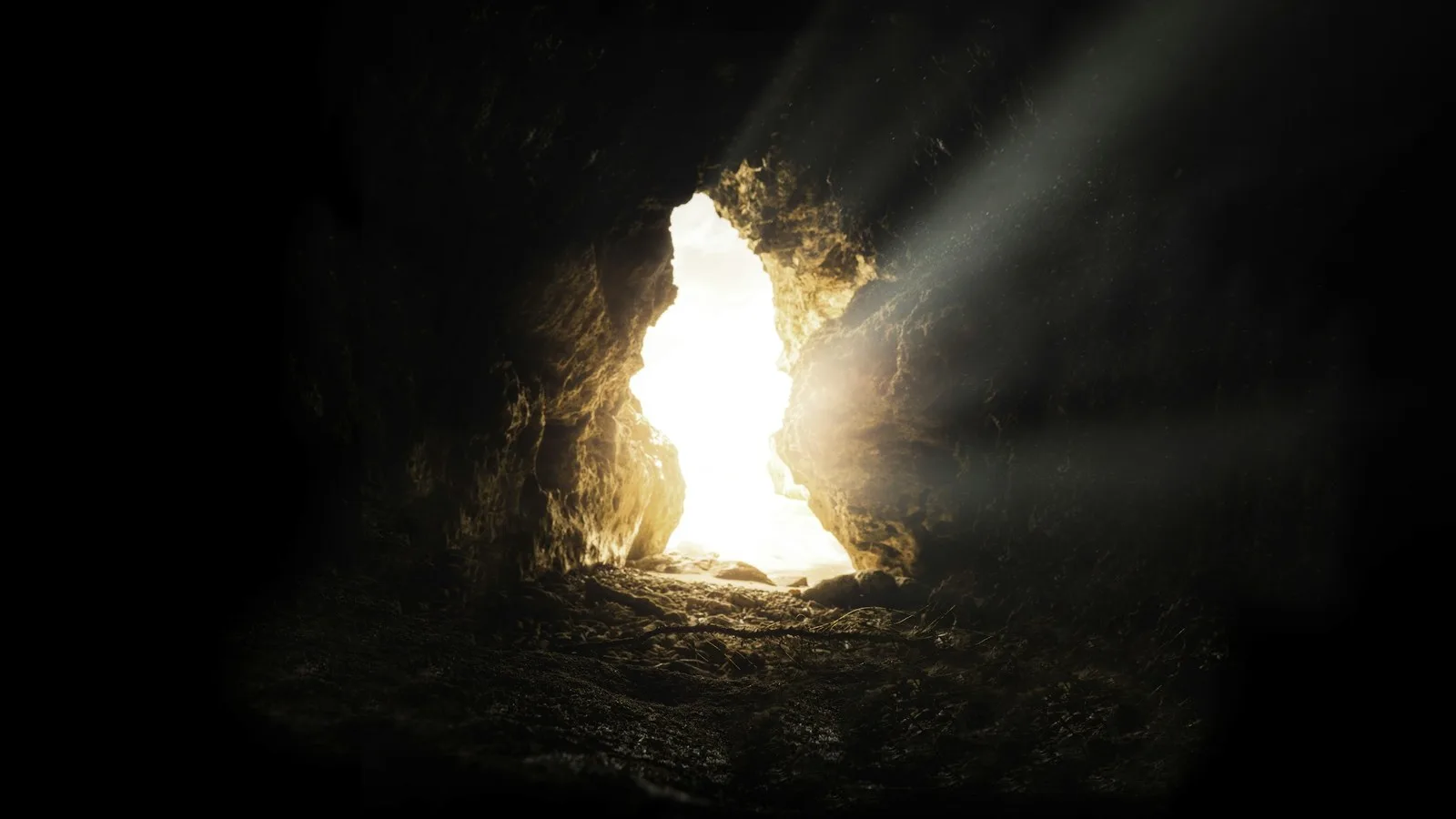
Photo: Emma Harrisova / Unsplash (z0asNtY2bvc)
I had lunch some months ago with a friend of mine. A very intelligent man, an attorney. He’s Jewish. I know – a Jewish attorney in Miami … what are the odds?
He believes in God, but he is not so sure about everything he reads in the Bible. (For him, his Bible is our Old Testament.) So over lunch he asked me, as gently as a lawyer ever asks anything, whether I really believe it – all of it. “You seem like a relatively intelligent guy,” he said. “Do you really believe all that?” When I said I do, then came the one question I get the most when talking about this subject: “You really believe a guy named Noah built a big boat, got two of every kind of animal aboard it, and saved them all through a flood? Really?”
Well. Do we?
I told him I did. And I put it to him this way: If you can believe there is a God who spoke the entire cosmos into existence by the word of His power, is it really that much of a stretch to think He could have a man build a boat, bring those animals aboard, and preserve the world that way? To his credit, he paused and said, “Hmm … I’ll think about that.” God bless him. He is a skeptic, but not a cynic. He is open to the truth.
So let us think about it. We have been walking through Genesis 1–11 in a series we are calling Foundations, and this morning we come to chapter 8. The last two Sundays Pastor James showed you a world gone totally corrupt, every human heart turned toward evil, and one righteous man whom God calls out to build a great wooden boat before it has ever even rained. His neighbors must have thought him stark raving mad. It takes him decades. Then the rains come, the floods hit, and every living creature is wiped from the earth. Only Noah, his wife, their three sons and their wives, and two of every kind of animal are preserved aboard the ark.
And now, chapter 8. The theme is simple, though there is more in this text than we could mine in a month of Sundays: God rescues Noah; Noah worships God. That is the whole story. How does it happen? Three movements.
First, God remembers His servant
“But God remembered Noah and all the beasts and all the livestock that were with him in the ark. And God made a wind blow over the earth, and the waters subsided” (Genesis 8:1).
Before you rush past that first line, notice the hinge the whole flood turns on. But God remembered Noah. What are we meant to think, that God had misplaced him? That He was off in some other corner of His cosmos admiring a spiral galaxy, and suddenly snapped His fingers and said, oh, what was the name of that fellow on the boat back on the little blue planet?
No. When the Old Testament says God remembers somebody, it means God is moving to show that person grace and favor. The word is used some seventy-three times, and every single time God is extending mercy to someone – to save a life, or perhaps to end a woman’s childlessness. To be remembered by God Almighty is beyond rewarding.
We all know a little of what that feels like. You meet someone once, exchange hellos, and months later they see you across a room and say your name. Doesn’t that feel good? Many of you knew Holmes Braddock, the Miami-Dade school board chairman for thirty-seven years, the man who led the desegregation of our schools. He faced death threats for that and did it anyway. I met him once, barely a handshake. Months later we crossed paths again, and before I could get a word out he said, “Hello, Kent. How are things over at the church?” He insisted I call him “Holmes,” not Mr. Braddock. I felt silly doing that, but I appreciated it all the same. It felt good to be known like that by someone as well-known and highly regarded as Holmes Braddock.
Now take that feeling and multiply it by about a billion: But God remembered Noah. That is one of the most beautiful sentences in all of Scripture. And its shadow side is the most terrifying. Our Lord says in the Sermon on the Mount that on the last day many will say, “Lord, Lord,” and He will answer, “I never knew you; depart from me” (Matthew 7:23).
C.S. Lewis paraphrased it: “Banished from the presence of Him who is present everywhere, erased from the knowledge of Him who knows all.” To be remembered by God is everything. If you do not yet know Jesus, let us remedy that today. You do not want to stand before God and hear those awful words – “I never knew you.”
Second, God repeats His mandate
Look at how God dries out the earth: “God made a wind blow.” The word we translate “wind” is the Hebrew word ruach, the same word we translate spirit. Back in Genesis 1:2, the ruach Elohim, the Spirit of God, hovers over the face of the deep. Here a ruach sent by God passes again over the waters. This text reaches back to Genesis 1 and ahead to Pentecost, where there came “a sound like a mighty rushing wind” that filled the house (Acts 2:2). The wind of God, drying out God’s flooded world … and the Spirit of God, enabling and empowering a new movement of God’s covenant people.
Then there are the birds. Noah sends out first a raven, and then a dove, each for seven days, “scouting out” the situation. He sends the dove again, and again, and finally she comes back in the evening with “a freshly plucked olive leaf” (Genesis 8:11). In this way Noah knows the waters are finally receding. Please note: these birds are not out sightseeing. They are on a mission – a mission to find dry land and carry word home. We are a faith family on a mission, too.
And when the ground is dry, God speaks: “Go out from the ark … that they may … be fruitful and multiply on the earth” (Genesis 8:16).
Does that sound familiar? Seven chapters earlier, in Genesis 1, God blesses the man and the woman and says, “Be fruitful and multiply and fill the earth” (Genesis 1:28). His plan for creation had not been thwarted by the flood or by the fall. It had only been delayed. God will accomplish His purposes with us or without us. They will not be denied. And while you have breath, you have something to say about whether He does it in you, with you and through you, or merely around you and without you. I hope and pray it is with you.
Third, God renews His creation
“Then Noah built an altar to the LORD … and offered burnt offerings on the altar” (Genesis 8:20). A man steps onto dry land after a year on the water, and his first recorded impulse is not to run around whooping it up on the beach. It is to worship. This is the first time we see an altar named anywhere in the Bible, the first place a sinful, fallen man builds a place to offer sacrifice to the Lord. And notice what even that cost. For a man to be made right with God, something has to die. Something has to shed its blood. Even here, at the dawn of a washed-clean world, drawing near to God requires a sacrifice.
Years ago I was given a one-on-one tour of the U.S. Capitol. In the Rotunda hang eight great murals of great moments in the founding of this country, and four of the eight depict acts of Christian worship: Columbus and his men kneeling in the sand giving thanks to God on San Salvador, October 12, 1492; De Soto’s “discovery” of the Mississippi in 1541; the pilgrims praying before they set sail from Holland in 1620; and Pocahontas’s baptism at Jamestown, Virginia, in 1614. For those who know God, or profess to, to kneel down and give Him thanks is our first impulse when we know He has delivered us.
It was never the ark
So let me bring it home, and let me tell you why this chapter and this Sunday belong side by side.
Today, as it happens, is Reformation Sunday. Five hundred years ago a German monk named Martin Luther nailed his 95 theses to the door of a cathedral in Wittenberg, Germany, and, without intending to, launched the revolution known as the Protestant Reformation. By simply studying the Bible in its original languages, Luther had recovered a truth buried under centuries of works and fear: that we are justified by faith, not works (Romans 1:16–17), and we are saved by the grace of God through faith in Christ alone (Ephesians 2:8–9). Luther was a great man – though greatly flawed – and God used him greatly. God uses greatly flawed people to accomplish great purposes.
Now hear how that truth sits inside Genesis 8. God told Noah to build the ark, and the ark carried his family through the flood. But it wasn’t really the ark that covered them and saved them; it was the grace of God. From first to last, this is the story of a God who saves by grace people who could not save themselves.
And God has rescued us as well, hasn’t He? He has sent us His Son, and it is His blood that covers us and brings us safely through. So stop inspecting whether your own ark is well built enough to save you. It never was. It is not your works, your sacrifice, or how fervently you worship. It is the grace of God made manifest in Christ.
That is what this table is all about. You may call it the Lord’s Supper, or communion, or some of you may call it the Eucharist. That is a perfectly good word – from the Greek eucharisteo, “to give thanks.” We give Him thanks for what He has done for us in Christ.
He has rescued us, so we worship Him.
If God has rescued you, is it in your heart to worship Him? It is beyond rewarding to be remembered by God Almighty. He remembered Noah before the waters ever fell. In Christ, He has remembered you. Come to the table. Come to Jesus. Let’s pray.
Our Lord and our God, Father, Son, and Holy Spirit. We thank You that it was never the ark but Your grace that held Noah, and never our works but Christ who holds us. When we drift back to trusting our own effort, draw us again to the blood that covers us. You have rescued us. We worship You. In Jesus’ name, amen.
Come worship with us this Sunday at Christchurch. Next week in Foundations we pick up God’s covenant with Noah in Genesis 9.
Frequently asked questions
What does "But God remembered Noah" mean in Genesis 8:1?
What is the significance of the dove and the olive leaf?
Why does Noah build an altar in Genesis 8:20?
How does the story of Noah connect to Reformation Sunday?
Pastoral writing from the team at Christchurch Miami — a faith family on mission in Kendall, Miami.