


History
Christopher Columbus: Great Man or Monster?
Columbus Day or Indigenous Peoples' Day? Kent Keller on the explorer's real record: his voyages, his cruelty, his faith and his sense of calling. A great man, and a greatly flawed one.
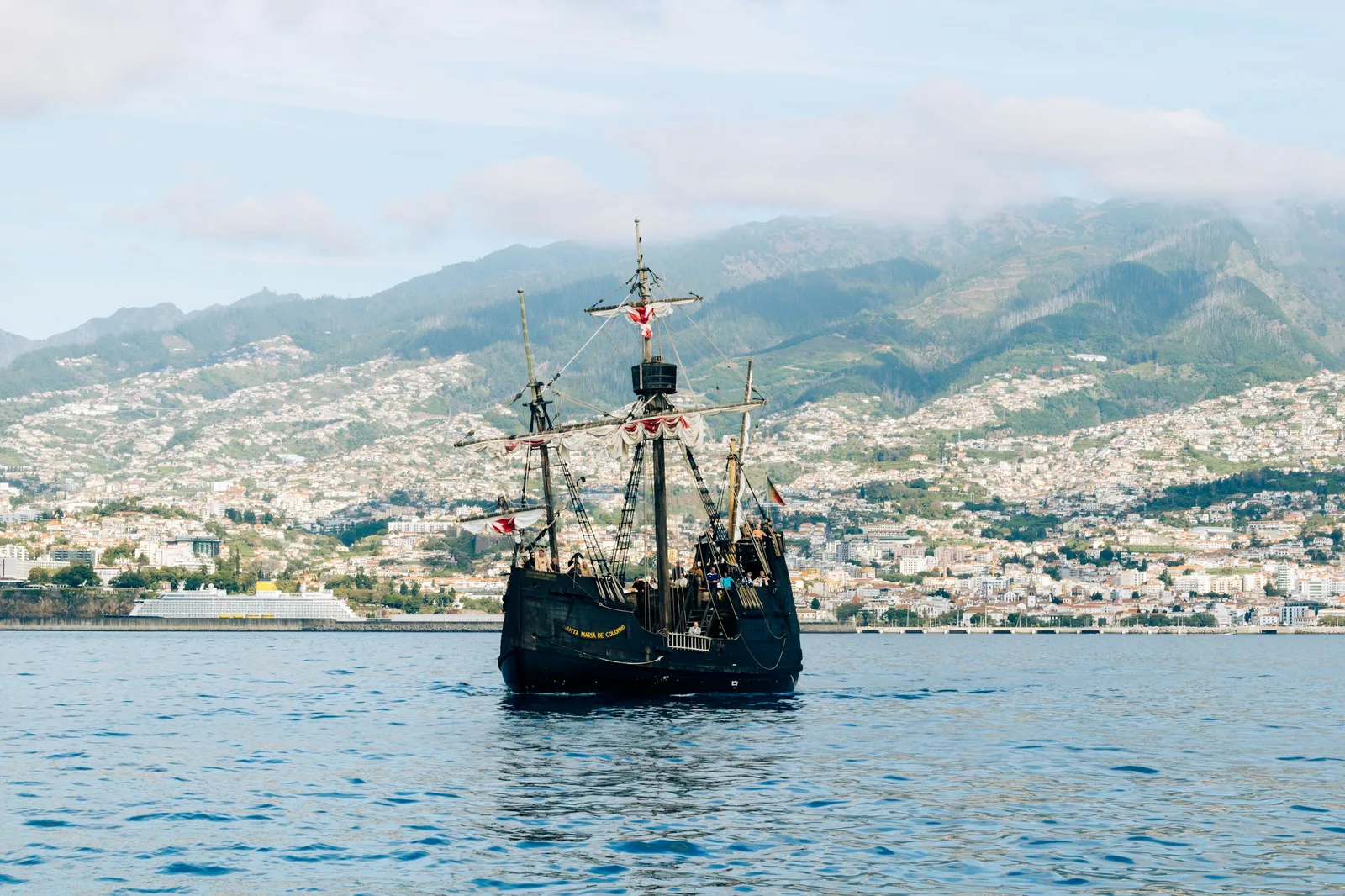
Photo: Balázs Gábor / Unsplash (z92hv4F9IOg)
Christopher Columbus was a great man.
Christopher Columbus was a monster.
Which is it? Or is the truth somewhere in between?
Columbus Day? Indigenous Peoples’ Day?
As we observe Columbus Day 2026, called by some Indigenous Peoples’ Day, I want to offer perhaps a slightly different, more nuanced perspective on the man who is generally credited with “discovering” the New World, Christopher Columbus.
I would like to start by saying, “I’m sure everyone reading this knows the basic facts about Columbus …,” but given the current state of the American educational system, that may be a faulty assumption. Without recounting his whole life story (you can find that easily enough on the internet), the basic salient facts as to why we remember him and have a federal holiday in his honor are these:
History 101
On August 3, 1492, Christopher Columbus (born Cristoforo Colombo / Cristóbal Colón)*, set sail from Palos de la Frontera, Spain, with three ships: the Niña, the Pinta and the Santa María. He and his crew sailed west-southwest for over two grueling, storm-filled months before sighting land, making landfall on the island now known as San Salvador – “Holy Savior” (the inhabitants called it Guanahani) – in what we now call the Bahamas. Columbus is therefore heralded as the first person from the Old World to set foot in the New.
He would go on from there to explore the northeast coast of Cuba, continuing on to the northern coast of Hispaniola before returning to Spain. He arrived back at Palos de la Frontera on March 15, 1493 and was greeted as a great hero. He would eventually make three more trips to the New World, making landfall at various islands in the Caribbean, including (all modern names) Montserrat, Antigua, St. Martin, the Virgin Islands, Puerto Rico, Hispaniola again, Cuba, Jamaica, Trinidad and Martinique, and even getting as far as Honduras, Nicaragua, Costa Rica, and Venezuela – a stunning accomplishment in one man’s lifetime.
The record: a mixed bag
So far, so good … but there are darker tiles in the mosaic of the life of the great Almirante de la Mar Océana (Admiral of the Ocean Sea). He is credibly accused of terrible mistreatment of indigenous peoples, using force and even torture to obtain what he and his crews needed in terms of provisions, and also to force them to tell him the whereabouts of their legendary storehouses of gold – which were largely mythical. He also cruelly punished their disobedience by inflicting punishments grossly out of proportion to their supposed crimes.
He also enslaved numerous natives, forcing them into arduous labor for him or taking them to Spain to give to Queen Isabella and King Ferdinand, among others. Many died en route. There are other accusations against him, including intentionally depopulating or committing genocide against entire indigenous populations. Some of those claims strain belief, if for no other reason than the improbability of the comparatively small number of men who accompanied Columbus on his voyages inflicting such disproportionate casualties on the indigenous populations. Regardless, there is no question Columbus was guilty of some measure of atrocities against fellow human beings.
A man of contradictions
On a personal level, the great explorer is also a man of contradictions. He was a devout Roman Catholic and indisputably a man of deep Christian faith. Yet while married to a Portuguese noblewoman who gave birth to his son, Diego, he kept a mistress who also bore him a son, Ferdinand.
In spite of these sins and personal imperfections, to truly understand Columbus we must also recognize that he set sail on August 3, 1492 not just in search of a direct path to India and a profitable trade route, but because he genuinely believed himself to be a divinely appointed messenger of God’s good news of salvation in Jesus Christ. He wanted to help fulfill the Great Commission (Matthew 28:18-20), helping spread the gospel to all the world – specifically, the Far East.
A man of prophecies
Columbus wrote two “books,” although they are not books in the sense we normally use the term. Rather, the first one, The Journal of the First Voyage, is a detailed daily log and account of his historic first voyage across the Atlantic. The other one, The Book of Prophecies, is an 84-page (leaf) manuscript in his own handwriting containing, among other things, citations from Isaiah, Jeremiah, Ezekiel, Daniel, Hosea, Joel, Amos, Obadiah, Micah, Zephaniah, Zechariah and the Apocryphal book of Baruch – all written to indicate he was fulfilling all those prophecies by undertaking this voyage. Perhaps the two most revelatory are these:
And now the Lord says – he who formed me from the womb to be his servant, to bring Jacob back to him and gather Israel to himself, for I am honored in the eyes of the Lord, and my God has become my strength – he says: “I will also make you a light for the Gentiles, that you may bring my salvation to the ends of the earth.”
“Before I formed you in the womb I knew you, before you were born I set you apart; I appointed you as a prophet to the nations.”
The man absolutely believed he was born to fulfill those prophecies, among many others … and set sail across an unknown, uncharted ocean in order to do so.
Long-time Miami resident and Columbus scholar Kay Brigham wrote in Christopher Columbus: His Life and Discovery in the Light of His Prophecies:
“And indeed, at the propitious moment Christopher Columbus made his entrance on the stage of history as the man of God’s own choosing …. The Admiral wrote: ‘Our Lord made me the messenger of the new heaven and the new earth, of which he spoke in the Book of Revelation by St. John, after having spoken of it by the mouth of Isaiah; and he showed me the place where to find it.’
“It could be said of Columbus … as it was said of Queen Esther: ‘And who knows but that you have come to royal position for such a time as this?’ (Esth. 4:14). The Admiral … consecrated [himself] to the privilege of serving God. [He had] the vision of fulfilling the great commission of our Lord Jesus Christ in the transoceanic territories, that is, the evangelization of the innumerable peoples of the Indies.
“The discovery of America was above all the triumph of Christianity, and the New Continent was to become the base for the greatest missionary activity that would emanate to the ends of the earth. In the providence of God, Spain and her adopted son, Christopher Columbus, were chosen to be ‘Christ-bearers’ so that the people of the ‘Other World’ could be incorporated into the mystical body of Christ, the Church” (51).
In The Christian Life and Character of the Civil Institutions of the United States, Benjamin F. Morris adds:
“In 1492, Columbus hailed the opening of the New World with a song of praise, and by a solemn act of prayer consecrated it to God. … Columbus came … as a religious man, an admiral of Christ, to find the continent, not for its material treasures, but because it held souls which he wished to bring as a trophy to the feet of Christ” (58).
The verdict: a great, and greatly flawed, man
It is hard for many modern people to reconcile a man who openly professes to follow Christ, and who believes it is his destiny to take the gospel to the far reaches of the planet, while simultaneously treating fellow image-bearers of God with such cruelty. But to those who want to demonize Columbus, tear down his statues and label him a genocidal monster while totally disregarding his enormous accomplishments, I would say: we must not judge someone who lived 500 years ago by the same standards we would apply to someone alive today. That is unfair, unrealistic and historically laughably and lamentably naïve.
And think about it: do you really believe your children and grandchildren, etc. might not judge you the same way 20-50-100 years from now, i.e. condemning you for not living up to their ideas of justice and equality? Do you honestly think the escalator of human progress and enlightenment has reached the top floor … and there you are?
Christopher Columbus was a sailor, navigator, visionary and would-be missionary. By any historical measure he was a great man. He was also a man of his times, doing things we justifiably find abhorrent, but which were unfortunately fairly typical of men in his position in the 15th and 16th Centuries. It is lazy and illegitimate thinking to judge him (or anyone else) from other eras by our 21st Century so-called “enlightened” standards. Like everyone reading this and the person writing it, he was also a flawed man, and great men tend to have great flaws.
So no, Columbus was no “saint.” But neither was he the one-dimensional genocidal monster so many today want to make him out to be. He was an excellent sailor, a courageous explorer, a highly motivated and visionary professing Christian, and a man of his culture who did some horrible things by our standards but were not that unusual or out of the ordinary by his. Virtually every civilization, every conquering nation, has done much the same without ever truly recognizing the error of their ways, repenting of their sins and undergoing radical transformation … with one exception:
The nation that would one day be born in this New World, the world Christopher Columbus discovered October 12, 1492 – the one and only one “conceived in liberty, and dedicated to the proposition that all men are created equal.” And today, October 12, 2026, we, the citizens of that providentially blessed nation, justifiably honor that man, that great though flawed man, for his accomplishments.
Kent
* There is some fairly recently discovered evidence that Columbus was not born in Genoa, Italy, but in western Spain, and that he was actually Jewish. For more on that: Christopher Columbus was Jewish and from this area of Spain – watch the documentary (NPR).
Frequently asked questions
Was Christopher Columbus a good man or a bad man?
Was Christopher Columbus a Christian?
Should we judge Columbus by today's standards?
Pastoral writing from the team at Christchurch Miami — a faith family on mission in Kendall, Miami.