

Apologetics
The Lindsay Clancy Saga: Victims, Villains, and Virtue-signaling
Three children are dead and their mother killed them. Kent Keller on what Christians should make of the Lindsay Clancy case — sin, mental illness, justice and grace, all of them real at once.

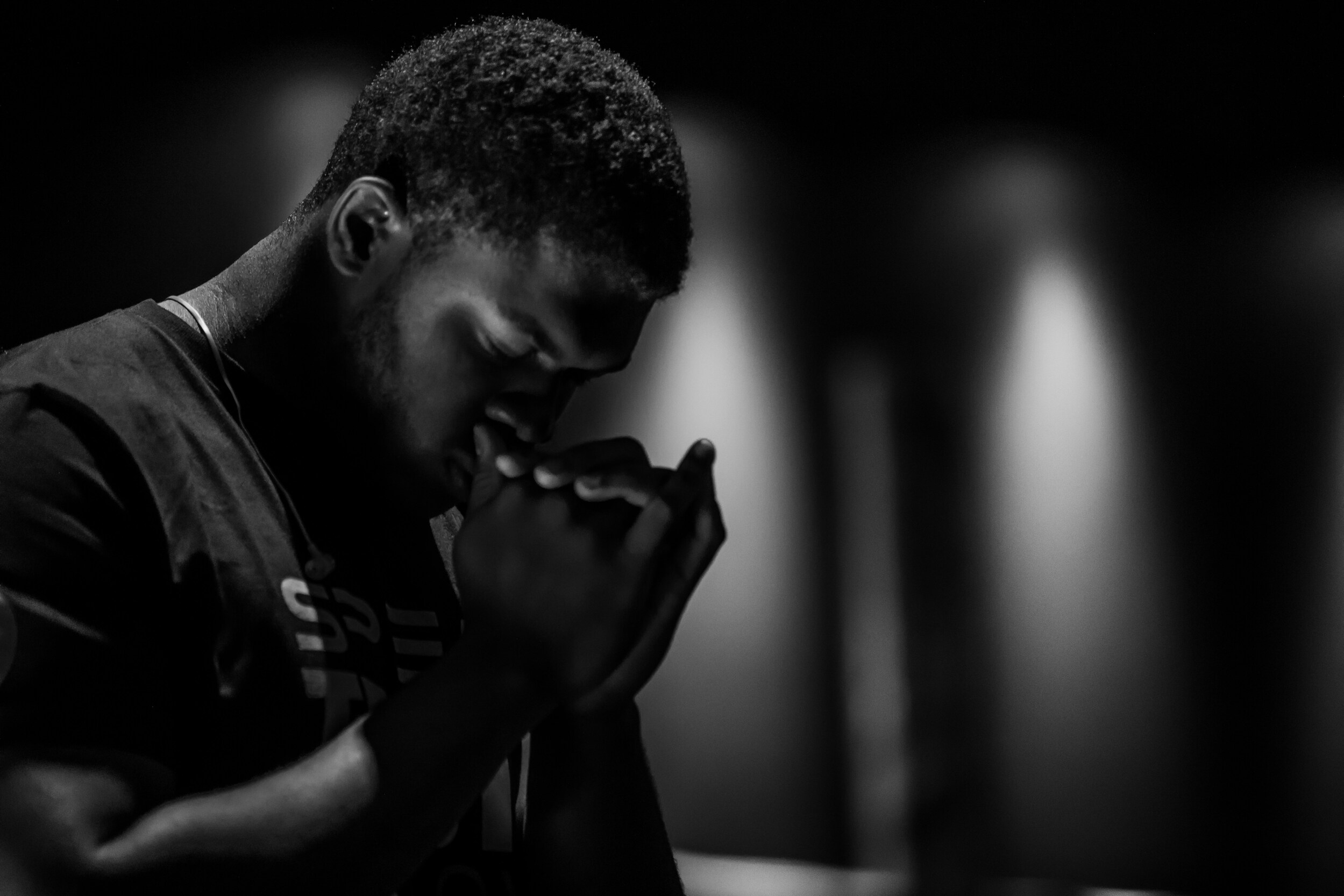
Photo: Sixteen Miles Out / Unsplash (3CA_-xcpulY)
Let me begin by stating clearly and unequivocally that I am a man, a member of the male species, possessed of an XY chromosomal pattern. I have never been a female, identified as one, or had any desire to become one. I like women – a lot – was blessed with a great one for a mother, am married to another remarkable one, and have had the pleasure of helping raise three more. But in all that, I have no illusions that I truly understand women, how they think and feel. I have even less grasp of what effect being pregnant, going through childbirth, and the period of time referred to as postpartum has on their mental and emotional states.
With that as disclaimer, I will throw caution to the wind and offer some thoughts on the Lindsay Clancy trial and the various cultural reactions it has engendered. Just so I’m clear, I am speaking solely for myself, not representing this as official church position or posture.
There are no winners here
First, I hope everyone would agree there are no winners here. This is a tragedy of the most heart-rending kind: three precious children are dead – not because of an accident, a rare genetic disorder or some monster broke into their home and murdered them. As nightmarish as those scenarios are, what actually happened is worse. I did not watch the trial, but having read numerous accounts thereof here is what transpired:
(Warning: the following may be disturbing.) In January 2023 three children – five-year-old Cora, three-year-old Dawson, and eight-month-old Callan – had their lives snuffed out in an act of violence by the person they should have been able to trust most in the world: their own mother. Lindsay Clancy, a labor and delivery nurse at Massachusetts General Hospital, took an exercise band, twisted it, placed it over the neck of Dawson and pressed until he stopped struggling. She then proceeded to strangle Cora until she went limp, before finally doing the same to Callan. Lindsay then slashed her own wrists and neck and threw herself out a second story window in an attempt to end her own life. She failed to kill herself but succeeded in making herself a paraplegic.
Callan survived three days in the hospital before succumbing to his injuries. All the while his father, Patrick Clancy, was begging God: “Just give me one. Please just give me one.” For reasons we will probably never understand his prayer was denied.
Patrick Clancy lost his three children and his wife all in one monstrous act of evil. Amazingly, he has asked the public to forgive Lindsay. In October 2024 he told The New Yorker: “I wasn’t married to a monster. I was married to someone who got sick.”
What could possibly cause a mother to do that to her own precious children – and then herself? And whatever answer we come up with, could it really explain, much less excuse, what she did?
Where does the responsibility lie?
Few cases in recent memory have elicited such intense debate about where the responsibility lies for such a heinous act when the guilty party is not in question. Clancy has openly admitted killing all three children. She said she did it because of postpartum depression (PPD), and because a (male) voice told her to kill her children and then herself. Call it PPD, psychosis, the tragic result of combining too many different psychiatric medications, an inexplicable act of pure evil, demonic influence or even possession … whatever label we apply, it still beggars the imagination that the one person who should have been their most fearsome protector instead became their executioner.
All of you moms – let me ask you: What would you do to someone who tried to harm your child/ren? If you are like most women I know, there wouldn’t be enough of that person left to bury. Lindsay Clancy not only didn’t protect her children, she’s the one they needed to be protected from. How sick and perverse ….
Victims, villains, and virtue-signaling
Almost as astonishing is the strange, some might even say macabre spectacle that took place outside the courtroom and, of course, all over social media, where sympathy for Clancy developed into something resembling a celebration – of a woman who murdered her children. As the trial and outside-the-courthouse drama headlined the news each day, along with every conceivable social media platform, predictable lines were drawn:
There are those who consider Clancy the real victim here:
-
Of her hormones;
-
Of the medical establishment, including the mental health system;
-
Of her husband;
-
Of the cruel fate that “condemns” women to be the only ones who, woke nonsense aside, can experience pregnancy, labor, delivery and postpartum depression.
There are those who consider her the true villain:
-
That voice that told her to do it seems very convenient. Asked by Assistant District Attorney Jennifer Sprague whether her notes ever once recorded Clancy saying she heard a voice, or what that voice said, hospital chaplain Sheila Cavanaugh, who spent hundreds of hours with her, answered: Never once.
-
After her third child, Callan died on January 27, 2023, according to Sprague, Lindsay woke up and used a whiteboard to ask: “Do I need an attorney?”
-
Just the facts, ma’am: “I don’t care what fancy verbal footwork you do – those three precious kids are dead, and she murdered them – period.”
And as always there are those who see this as an opportunity for virtue signaling:
-
Women who say, “We understand, Lindsay, we’ve suffered from PPD too. We’re with you, sister” – turning her into some kind of hero, a “Rosa Parks” for women everywhere who suffer from PPD and other psychiatric disorders. Renee Kimball, the organizer of the women outside the courthouse supporting Clancy, said, “Any one of us could be sitting in her chair”;
-
Those who want to put the medical establishment, including the mental health system, on trial: “All those doctors should not have put her on all those medications” (a combined 30 prescriptions for 13 different medications in the months prior to the murders and suicide attempt);
-
Those who want to blame her husband: “He knew she might kill their children but left her alone long enough to do it anyway;”
-
Those who believe no man should have a say in this case, period, including the three who were on the jury, and especially the one who refused to find her not guilty;
-
And those who want to use the fact that women are the only ones who can experience pregnancy, labor, delivery and postpartum depression to cry out against the “patriarchy”: “If a man had done this all you men would slap him on the back and say ‘We got you, bro.” (FWIW, John List, suffering from depression and facing financial ruin due to losing his job as an accountant, killed his wife, mother, and three children in their Westfield, New Jersey home on November 9, 1971. He immediately disappeared to start a new life and was caught 18 years later. Although he claimed he was not guilty due to PTSD from his military involvement, he was tried, convicted and sentenced to five consecutive terms of life imprisonment. He received no support from men, or anyone else.)
So what are we as Christians to think?
So what are we as Christians to think about this family tragedy that has played out in the news and on social media? Here is my take. Do with it what you will.
Sin is real
Sin is real. Human sin nature is real (Genesis 3; Romans 3; Jeremiah 17:9). Anyone who wants to treat something like this situation as merely an illusion (New Agers); an outworking of karma (Hindus, Eastern mystics); unnecessary suffering because of a woman’s (Lindsay’s) and a man’s (Patrick’s) unhealthy attachment to something in this life, namely their children, and they’ll be happier as soon as they let go of that attachment (Buddhists); or a good thing because there are three less infidels in the world (radical Islamists); is something between a Pollyanna and a monster.
Mental illness is real
Mental illness is real. I don’t think there is any question Lindsay Clancy was at the time of the murders, is now and possibly always will be mentally ill. I’m not qualified to nor will I attempt to diagnose or explain her condition, but it seems inescapable to this observer there is something deeply, tragically broken in her psyche – beyond the usual sense in which we are all broken to some degree as a result of the Fall (again – Genesis 3).
Justice is real
Justice is real. These facts are not in dispute: Cora, Dawson and Callan are dead, and their own mother killed them. Whether she was and is depressed, a victim of her hormones, demon-possessed – a possibility I do not think unrealistic – or completely unable to distinguish reality from unreality, Lindsay Clancy needs to be held accountable (Galatians 6:7). Her children, like her, are (were) image-bearers of God Almighty, and she destroyed them. No one has the right to do that to another human being willfully, wantonly and without cause. Whether in a women’s prison or a mental institution, she should never be allowed to enjoy another day of freedom … just as she made sure her children never would.
God’s grace is real
God’s grace is real. As heinous as her sins were – and could there be anything much more depraved than a mother strangling her own small children to death, then trying to take her own life? – the good news of the gospel of God’s grace is that there can be forgiveness even for something as ghastly as filicide and infanticide. As I often remind people, the grace of God is greater than our sin (Ephesians 2:8-10). Even Lindsay Clancy’s.
As 16th-17th C. English Puritan pastor and theologian Richard Sibbes put it: “There is more mercy in Christ than there is sin in us.”
My take: a murderer, not a victim and not a hero
So: In my opinion, Lindsay Clancy is a murderer, not a victim, not a hero. She is no role model for other women suffering from postpartum depression, or anything or anyone else. She may have been temporarily insane at the time she committed the crimes, but she still needs to be held accountable.
Could Lindsay Clancy be forgiven?
Could she be forgiven? As incredible as it may seem, yes, she could – if she ever “comes to her senses”, recognizes the true horror of what she has done, and cries out to God in sincere sorrow and repentance – the answer is yes. That’s what the cross of Christ is all about.
Romans 5:8: But God demonstrates his own love toward us, in that while we were yet sinners, Christ died for us.
I sincerely hope one day she does indeed recognize the truth about what she has done and comes to grips with it. Until that day –
Rest in peace, Cora, Dawson and Callan. May God bless Patrick, his new wife and the new baby I understand is on the way. And I hope he finds peace again too, in reaching out to the God who understands what it is like to have his Child’s life cut short by evil in an unspeakable act of violence.
And I hope someday soon Lindsay Clancy genuinely repents of her sins and turns to the one Person who alone can take such evil, redeem it and – somehow – turn it to good (Genesis 50:20) … just as he took the death of his only Son and turned it into the way of salvation for all who come to him.
— Kent
If any of this is close to home. Postpartum depression and postpartum psychosis are real, they are treatable, and they are far more common than most people know. Needing help is not a character failure, and asking for it early is the bravest thing a new mother can do.
- 988 — Suicide & Crisis Lifeline. Call or text 988, any hour. If you are thinking about harming yourself or your children, this is the right number, right now.
- Postpartum Support International. Call or text 1-800-944-4773, or visit postpartum.net. They will connect you with people who do this every day.
- Us. Email prayer@christchurchmiami.org and it reaches our staff and elders directly. You do not have to explain yourself well, and you will not shock us.
If you are worried about someone else, say something to them today. Ask the direct question. You will not plant the idea, and the question itself tells them they are not alone with it.
Frequently asked questions
What should Christians think about the Lindsay Clancy case?
Can God forgive something as terrible as a mother killing her children?
Does mental illness excuse what someone does?
Pastoral writing from the team at Christchurch Miami — a faith family on mission in Kendall, Miami.